
 en
en  Español
 عربى
عربى
How to choose the right air conditioner copper pipe connector?
To choose the right air conditioner copper pipe connector, you need to match five key factors: pipe outer diameter, connection type, refrigerant compatibility, pressure rating, and material quality. Getting any one of these wrong can result in refrigerant leaks, system inefficiency, or premature fitting failure. Air conditioning copper pipe connectors are precision components that join copper refrigerant lines between indoor and outdoor units, enable pipe repairs and extensions, and connect new units to existing pipework — selecting the correct connector for each specific application is fundamental to a reliable, leak-free air conditioning installation.
Content
- 1 Step 1: Identify Your Copper Pipe Outer Diameter
- 2 Step 2: Choose the Right Connection Type for Your Application
- 3 Step 3: Confirm Refrigerant Compatibility
- 4 Step 4: Evaluate Material Quality — Why Brass Matters
- 5 Step 5: Match the Connector Type to the Specific Task
- 6 Quality Checklist: How to Assess a Connector Before Purchase
- 7 Common Selection Mistakes and How to Avoid Them
Step 1: Identify Your Copper Pipe Outer Diameter
Pipe outer diameter (OD) is the most fundamental specification for any copper pipe connector. The connector must precisely match the OD of the copper pipe it will join — even a 0.5mm mismatch prevents proper sealing and creates a leak point under refrigerant pressure.
Air conditioning copper pipes are specified by outer diameter in metric (mm) or imperial (inch) sizes depending on the country and equipment origin. Measure the pipe OD with a vernier caliper rather than estimating — the difference between a 1/4 inch (6.35mm) and a 5/16 inch (7.94mm) pipe is less than 2mm but these sizes are not interchangeable.
| Imperial Size | OD (mm) | Typical Line Type | Common AC Application |
|---|---|---|---|
| 1/4 inch | 6.35mm | Liquid line | Small split AC units (up to ~2.5 ton) |
| 3/8 inch | 9.52mm | Suction line (small) | Small to medium split units |
| 1/2 inch | 12.70mm | Suction line (medium) | Medium split AC (2–3 ton) |
| 5/8 inch | 15.88mm | Suction line (large) | Large split and multi-split systems (3–5 ton) |
| 3/4 inch | 19.05mm | Suction line (large commercial) | Commercial and VRF systems |
If you are connecting pipes of two different diameters — for example, extending an existing line with a different-gauge pipe, or connecting a new unit with a different pipe specification to existing pipework — you will need a reducer fitting (also called a reducing coupling) that steps from one OD to the other. Always measure both pipes before ordering.
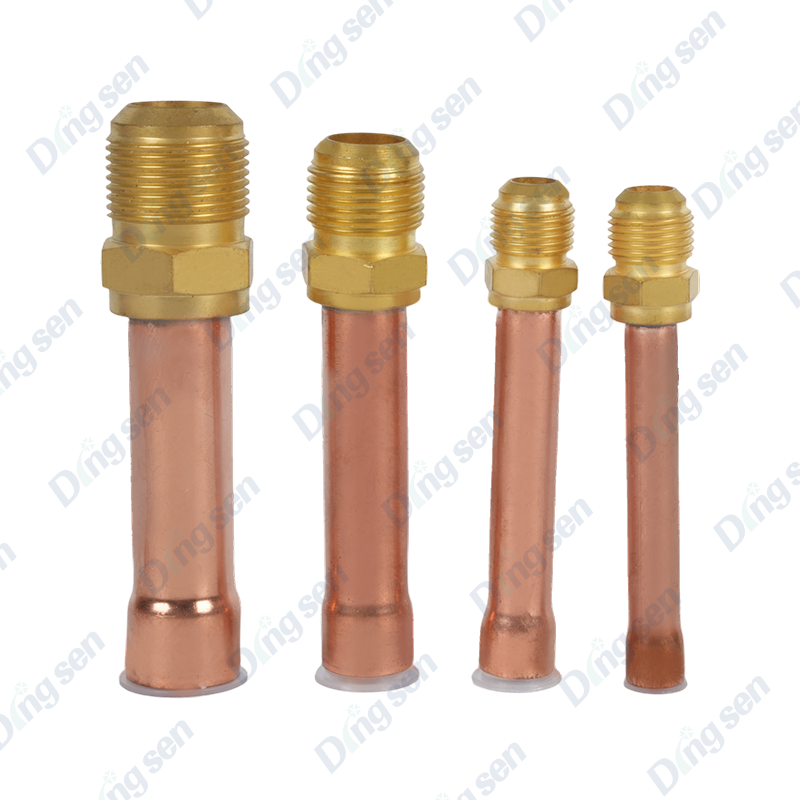
Step 2: Choose the Right Connection Type for Your Application
The connection type determines how the connector joins to the copper pipe and how reliably it seals against refrigerant leakage over the system's service life. Each connection type has specific applications where it performs best.
Flare Fittings (Most Common for AC Work)
Flare fittings are the standard connection type for air conditioning refrigerant lines in most countries. The end of the copper pipe is expanded using a flaring tool to create a conical flare at a 45-degree angle, which seats against a matching conical face in the fitting body when a flare nut is tightened over it. The metal-to-metal sealing contact between the flared pipe end and the fitting body — without any rubber seal in the refrigerant flow path — provides a reliable, refrigerant-compatible seal.
Flare fittings are preferred for exposed or accessible connections because they are field-made (no heat required), fully demountable for future service, and produce a clean, reliable seal when properly made. They are the correct choice for most residential and light commercial split AC installation and repair work.
Compression Fittings
Compression fittings use a brass or copper ferrule (olive) that is compressed around the pipe as the fitting nut is tightened, creating a seal between the ferrule, the pipe, and the fitting body. They require no special tools beyond two wrenches and produce a reliable seal on clean, undamaged pipe. However, compression fittings are generally considered less reliable than flare fittings for refrigerant service — particularly under vibration — and are more commonly used for water and gas lines than for high-pressure refrigerant applications.
Solder / Braze Fittings
Brazed (silver-soldered) fittings create a permanent, extremely strong joint by flowing a silver-bearing filler metal into the gap between the fitting socket and the pipe using an oxyacetylene or MAPP gas torch. Brazed joints are the strongest and most reliable refrigerant connections available — they are standard in commercial refrigeration, large VRF systems, and any installation where connection access after installation will be difficult. Brazing requires skill and equipment and produces a permanent joint that cannot be easily demounted — it is not the right choice for connections that may need future adjustment or access.
Push-Fit / Quick-Connect Fittings
Push-fit connectors use an internal sealing ring and gripping mechanism that allows the pipe to be inserted and locked without any additional tools or preparation. They are the fastest connection method and ideal for emergency repairs, temporary connections, or installations where tools are not available. Quality push-fit fittings rated for refrigerant service incorporate EPDM or FKM (Viton) sealing rings that resist degradation from modern refrigerants. However, they are generally not considered equivalent to flare or brazed connections for permanent, high-pressure refrigerant service.
Step 3: Confirm Refrigerant Compatibility
Air conditioning systems use different refrigerants depending on their age and design, and not all connector materials and sealing rings are compatible with all refrigerants. Selecting a connector that is incompatible with the system refrigerant causes seal degradation, chemical attack on the fitting body, and refrigerant leakage.
- R-22 (older systems): A mineral oil-compatible refrigerant found in systems manufactured before approximately 2010. Connectors for R-22 systems typically use neoprene or EPDM sealing rings. Note that R-22 is being phased out under the Montreal Protocol — if retrofitting an R-22 system, confirm the connector is rated for the replacement refrigerant being used
- R-410A (current standard for many systems): A high-pressure HFC refrigerant operating at significantly higher pressures than R-22 — up to 49 bar (700 psi) high side. Connectors for R-410A must be rated for these higher pressures and use FKM (Viton) sealing rings that resist HFC refrigerants and polyolester (POE) oil used with R-410A
- R-32: A newer single-component HFC refrigerant with even higher operating pressures than R-410A. Connectors must be explicitly rated for R-32 service — the higher pressure and slightly different chemical properties compared to R-410A make it important to verify compatibility rather than assume
- R-134a and R-407C: Used in some commercial and automotive applications — verify sealing ring material compatibility with the system's lubricating oil type (POE, PAG, or mineral oil) as well as the refrigerant itself
Always check the pressure rating stamped on the connector body and verify it exceeds the maximum operating pressure of your specific refrigerant. Connectors rated for R-410A service are suitable for pressures of at least 4.5 MPa (45 bar) and are a safe choice for most modern residential AC applications.
Step 4: Evaluate Material Quality — Why Brass Matters
The base material of an air conditioning copper pipe connector directly determines its corrosion resistance, pressure tolerance, and service life. Precision-machined brass is the material of choice for quality AC refrigerant connectors, and understanding why helps identify connectors that will perform reliably over the system's full service life.
- Brass (CW617N or equivalent): The standard material for high-quality AC connectors. Brass is an alloy of copper and zinc with excellent corrosion resistance to refrigerants, moisture, and refrigerant oils. It machines to tight tolerances on precision lathes, producing seating surfaces and thread forms that create reliable metal-to-metal seals. High-quality connectors use brass with copper content of 57–63% for optimal strength and machinability
- Surface finish quality: The seating face of a flare fitting or the thread form of any connector must be machined to a smooth, consistent surface finish — surface irregularities on seating faces prevent complete metal-to-metal contact and create potential leak paths. Reject connectors with visible machining marks, burrs, or rough surfaces on seating or sealing areas
- Avoid low-grade zinc or pot metal: Budget connectors made from low-grade zinc alloy (sometimes called white metal or pot metal) may look similar to brass but are significantly weaker, more porous, and more susceptible to corrosion and cracking under pressure. These materials are not suitable for high-pressure refrigerant service and should not be used in air conditioning refrigerant lines
Step 5: Match the Connector Type to the Specific Task
Beyond size and connection type, the geometric configuration of the connector must suit the physical routing and connection requirements of the specific installation or repair.
| Connector Type | Configuration | Best Use Case |
|---|---|---|
| Straight coupling | Inline, same diameter both ends | Extending pipe runs, splicing cut or damaged pipe |
| Reducer / reducing coupling | Inline, different diameter each end | Connecting pipes of different OD, adapting new unit to existing line |
| Elbow (45° or 90°) | Angled change of direction | Routing pipes around corners, obstacles, and building structure |
| Tee fitting | Three-way junction | Multi-split and VRF branch connections |
| Union fitting | Three-piece demountable inline joint | Connections that need to be regularly broken for service access |
| Flare union / adapter | Flare-to-flare or flare-to-thread | Connecting flared copper line to threaded valve or equipment port |
Quality Checklist: How to Assess a Connector Before Purchase
Before purchasing or installing any air conditioner copper pipe connector, run through this checklist to confirm it is suitable for the application and built to the quality standard required for reliable refrigerant service.
- Verify material specification: Confirm the connector is made from brass (not zinc alloy) — quality connectors will specify the material grade. A yellow-gold color and dense, heavy feel are positive indicators; a grey or silver appearance suggests zinc or pot metal
- Inspect seating surfaces: Examine the flare seating face or the sealing surfaces under good light — they should be smooth, consistent, and free of machining marks, burrs, pitting, or scratches. Any surface defect on a seating face is a potential refrigerant leak path
- Check thread quality: Thread forms should be complete, evenly cut, and free of cross-threading or damaged crests. Run a matching nut onto the thread by hand — it should turn smoothly without binding or wobbling
- Confirm pressure rating: The maximum working pressure should be stamped or marked on the connector or its packaging. For R-410A systems, accept nothing rated below 4.5 MPa (650 psi)
- Verify sealing ring material: For connectors that incorporate sealing rings, confirm the ring material is FKM (Viton) or EPDM rated for the specific refrigerant in use — not generic rubber that will swell or degrade under refrigerant exposure
- Check dimensional accuracy: The pipe entry bore of the connector should allow the copper pipe to slide in smoothly with minimal clearance — excessive slop indicates poor dimensional control that will translate to an inconsistent flare or compression seal
Common Selection Mistakes and How to Avoid Them
The following mistakes account for the majority of connector-related refrigerant leaks and installation failures in AC work — each is straightforward to avoid with the right information.
- Estimating pipe size by eye: Even experienced technicians misjudge pipe OD visually — always measure with a vernier caliper before selecting a connector. A 1/4 inch and 6mm pipe look nearly identical but require different connectors
- Using water-rated fittings for refrigerant service: Plumbing compression fittings designed for water service are not rated for the pressures or chemical environments of refrigerant systems. Always select connectors explicitly rated for refrigerant service
- Ignoring refrigerant type when selecting sealing rings: A connector with an EPDM ring that was correct for R-22 may not be suitable for an R-410A or R-32 system — always verify sealing ring compatibility with the specific refrigerant in the system being worked on
- Overtightening flare connections: Over-tightening a flare nut cracks or deforms the flare, destroying the seating surface and creating a leak. Tighten flare nuts to the torque specified by the fitting manufacturer — typically 18–42 N·m depending on pipe size — using a calibrated torque wrench
- Selecting budget connectors for permanent installations: For connections that will be enclosed in walls, ceiling voids, or inaccessible locations, use only high-quality brass connectors that have been leak-tested — the cost of rectifying a refrigerant leak from a failed connector inside a wall is many times the premium cost of a quality fitting
-
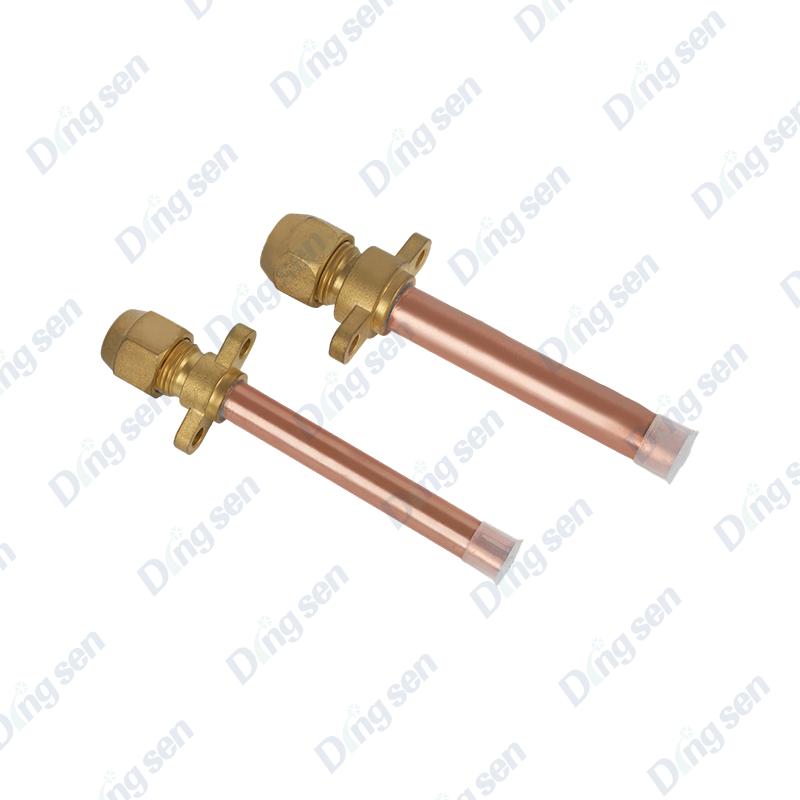
The hammerair conditioning copper pipe connector is a pipe connector designed sp...
-
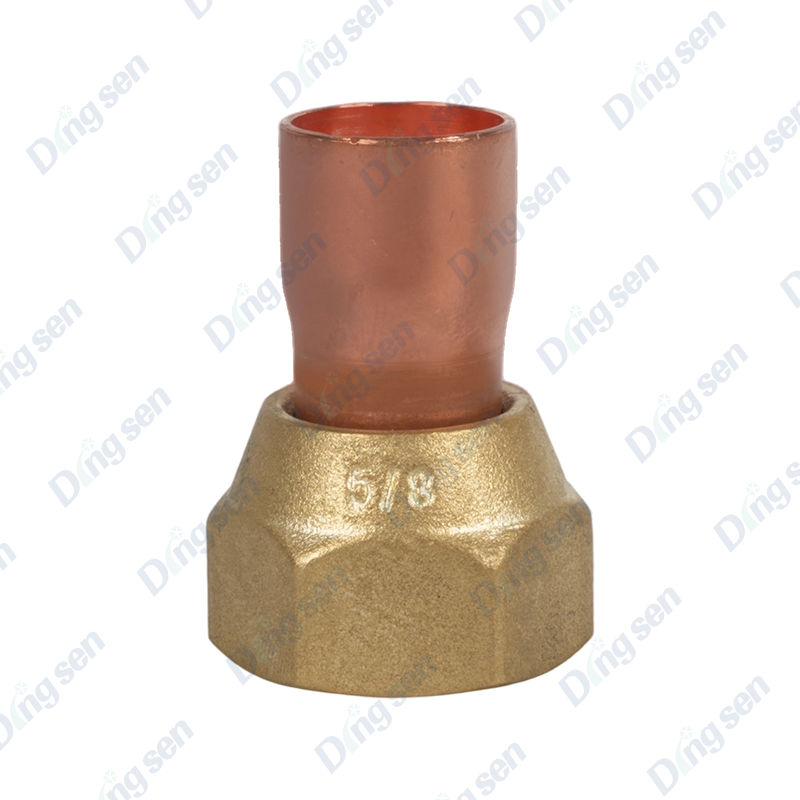
The cup shaped air conditioning copper pipe connector is a high-performance acce...
-

The long air conditioning copper pipe connector is a metal connector designed sp...
-
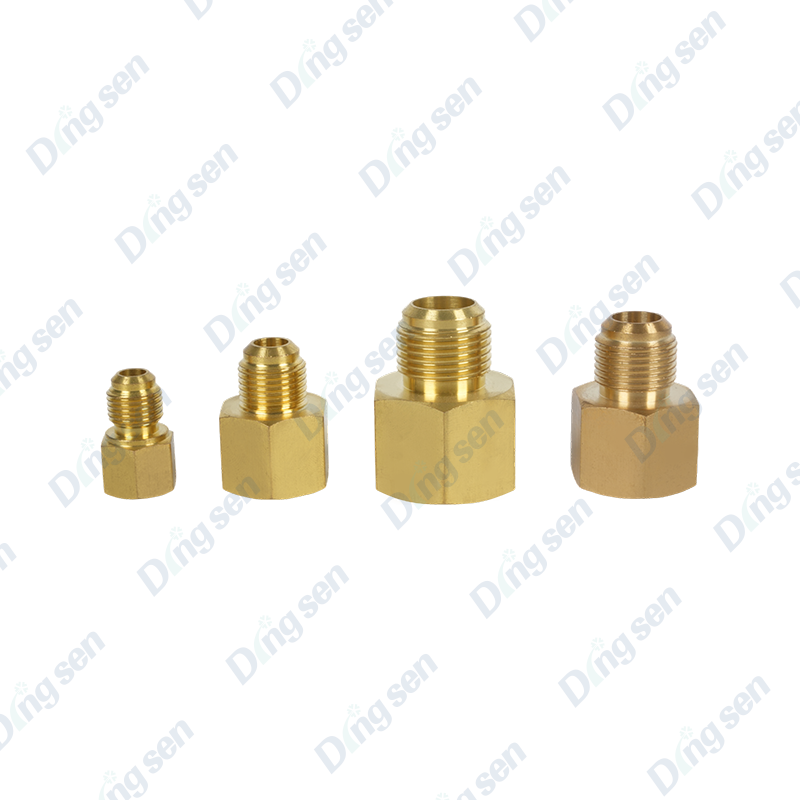
Air conditioning copper pipe female-male connector are core fittings for connect...
-
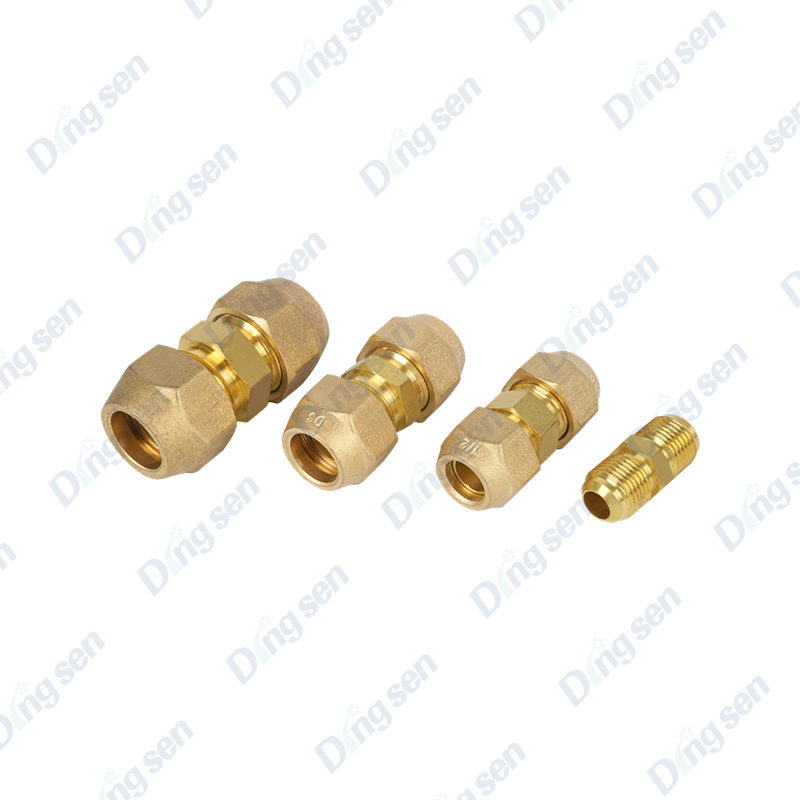
Air conditioning copper pipe duoble connector are core fittings for connecting t...
-
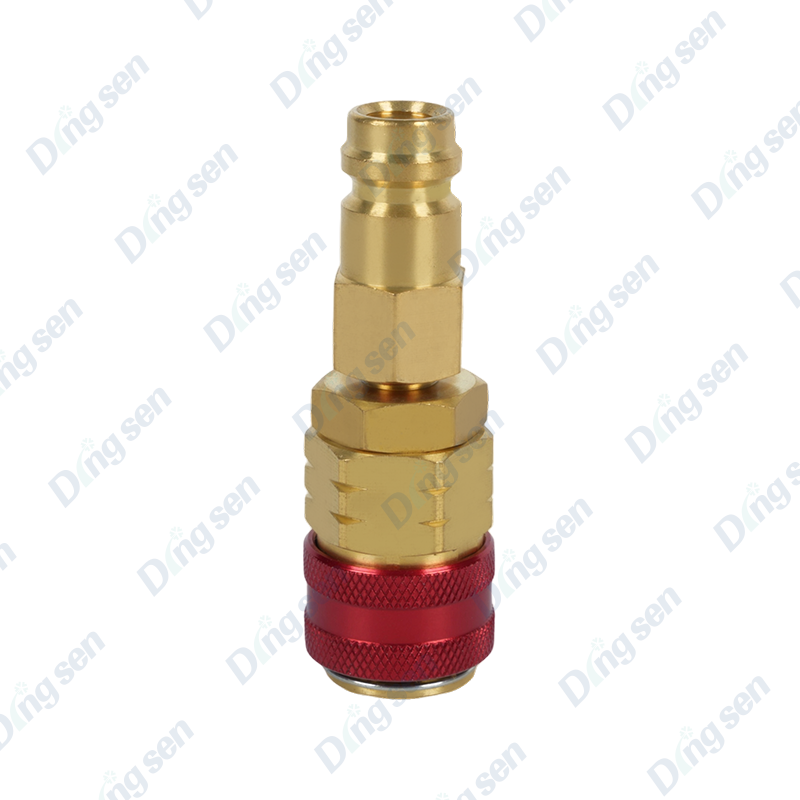
The all-copper fluorinated quick connector is a specialized connector for automo...

Contact Us
-

No. 109 Jiefang Road, Diankou Town, Zhuji City, Shaoxing, Zhejiang Province
-

+86-13867581196
-

Copyright © shaoxing DingSen Refrigeration Technology Co Ltd. All Rights Reserved
OEM Refrigeration Parts Manufacturer Custom Automotive AC Parts Factory