
 en
en  Español
 عربى
عربى
High Pressure Solenoid Valve Guide: Selection, Ratings, and Reliability
A refrigeration contractor once ordered a batch of solenoid valves for the discharge line of an R-410A condensing unit. The valve body was rated for 45 bar, which looked generous on a system that never ran above 30 bar. The valves began seeping within two months. The body was never the problem. The Buna-N seal was, because discharge gas on that rack regularly reached 105 degrees Celsius and that seal was comfortable only up to about 90.
Here is the short version before the detail. A high pressure solenoid valve is a system component, not a catalogue number. The pressure figure on the label only becomes useful when the seal material, the coil class, the media temperature, and the maximum opening differential all match the conditions the valve will actually meet. Miss one of those and the valve fails long before anyone gets near its pressure rating.
Content
- 1 What High Pressure Means in a Solenoid Valve
- 2 The Three Pressure Numbers Behind Every Rating
- 3 Seal Material and Temperature Decide Service Life
- 4 Coil Voltage, Class, and Opening Differential
- 5 Where High Pressure Valves Sit in a Circuit
- 6 Specification Mistakes That Cause Repeat Failures
- 7 A Selection Checklist You Can Send to a Supplier
- 8 Testing and Verification Before You Commit
- 9 Choosing a Supplier for High Pressure Valves
What High Pressure Means in a Solenoid Valve
Suppliers do not share one official threshold for the phrase high pressure solenoid valve. The practical bands used in refrigeration, automotive air conditioning, and light industrial work are reasonably consistent, though, and they are worth knowing before you compare quotations.
| Band | Typical maximum working pressure | Typical applications |
|---|---|---|
| Standard duty | Up to 21 bar | Suction lines, water circuits, low pressure liquid lines |
| Medium duty | 22 to 35 bar | R-410A liquid lines, most passenger car air conditioning |
| High duty | 36 to 60 bar | Discharge lines, hot gas bypass, subcritical CO2 |
| Very high duty | 60 to 140 bar | Transcritical CO2, hydraulic power units, test benches |
Two things follow from this. First, the same nominal valve size can sit in two different bands depending on the body, seal, and coil fitted to it. Second, a high pressure solenoid valve is not automatically right for a low pressure line, because high pressure bodies often use stiffer springs and smaller effective orifices, which costs flow capacity.
For refrigeration and automotive air conditioning, most real work happens between 21 and 60 bar. That is also where a supplier's pressure bands matter most, because a body, seal kit, and coil matched to the same band behave predictably for years.
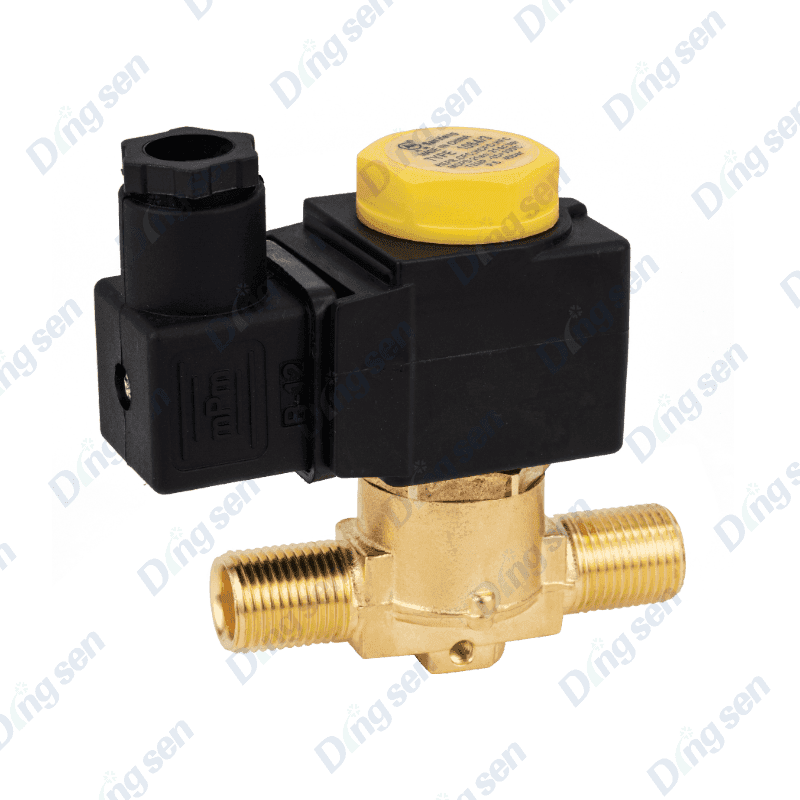 10 series solenoid valveThe 10 series solenoid valve is constructed of corrosion-resistant brass with a high-strength blue plastic coil housing. Its overall design is simple and robust, makin...View Product →
The Three Pressure Numbers Behind Every Rating
When a datasheet lists a single pressure figure, ask which of the three it is.
- Maximum working pressure, or MWP, is the highest pressure the valve is designed to hold and operate at continuously.
- Proof pressure, usually 1.5 times MWP, is applied briefly to confirm that the body and seals do not deform or leak.
- Burst pressure, usually three to four times MWP, is the point at which the body itself fails. It is a safety margin, not an operating condition.
Sizing decisions should be made against maximum working pressure with the temperature correction applied. A valve rated at 50 bar at 20 degrees Celsius may only be rated at 40 bar at 80 degrees Celsius, because elastomer hardness and coil insulation both fall away as temperature rises. That derating curve is the most ignored line on most datasheets.
Seal Material and Temperature Decide Service Life
Seal selection is where high pressure valve specification is won or lost. Four materials cover most refrigeration and automotive work.
- NBR handles most common refrigerants and mineral oils up to roughly 90 degrees Celsius. Fine on liquid lines, marginal on discharge.
- HNBR adds heat and oil resistance and is useful to about 120 degrees Celsius, which makes it a common upgrade for hot gas lines.
- EPDM is strong against water, steam, and glycols, but less suited to mineral oil circuits.
- PTFE and FKM offer wide chemical resistance and higher temperature ceilings at a higher unit cost.
Media matters as much as temperature. PAG and POE oils used in automotive and modern refrigeration systems attack some elastomers that handle mineral oil without trouble. If the valve will see POE oil, confirm compatibility with the seal supplier instead of assuming a general purpose seal will hold.
Coil Voltage, Class, and Opening Differential
On the electrical side, three figures decide whether the valve will actually open under pressure.
Maximum opening pressure differential, usually shortened to MOPD, is the largest pressure difference across the valve at which the coil can still pull the plunger or lift the piston. A valve with a 16 mm orifice and a small coil might have an MOPD of 6 bar even though the body is rated for 40 bar. Fit it on a discharge line with a 20 bar differential and it will sit there humming.
Coil voltage and insulation class are the other two. Common options are 24 V, 110 V, and 220 V alternating current for fixed equipment, and 12 V or 24 V direct current for mobile systems. Class F insulation allows a winding temperature of 155 degrees Celsius and class H allows 180 degrees Celsius. Ambient heat in a plant room adds to winding temperature, so class H is a sensible choice in hot rooms.
Where High Pressure Valves Sit in a Circuit
In a refrigeration circuit, high pressure solenoid valves appear in three places.
- Liquid line, to pump down the evaporator and isolate the liquid supply during defrost or service.
- Discharge and hot gas lines, to control hot gas bypass, hot gas defrost, and capacity regulation.
- Receiver and oil return lines, to manage pressure equalisation and oil movement on larger racks.
Directional valves are common in these positions. Many designs hold pressure in one direction only, so fitting one backwards produces a valve that looks like a leaker when it is in fact doing exactly what it was built to do.
For liquid line duty on commercial refrigeration, a pilot operated piston design gives a good balance of large orifice and moderate coil force. A small pilot solenoid controls a piston that does the heavy lifting, so the coil stays a reasonable size while the valve still opens against a high differential.
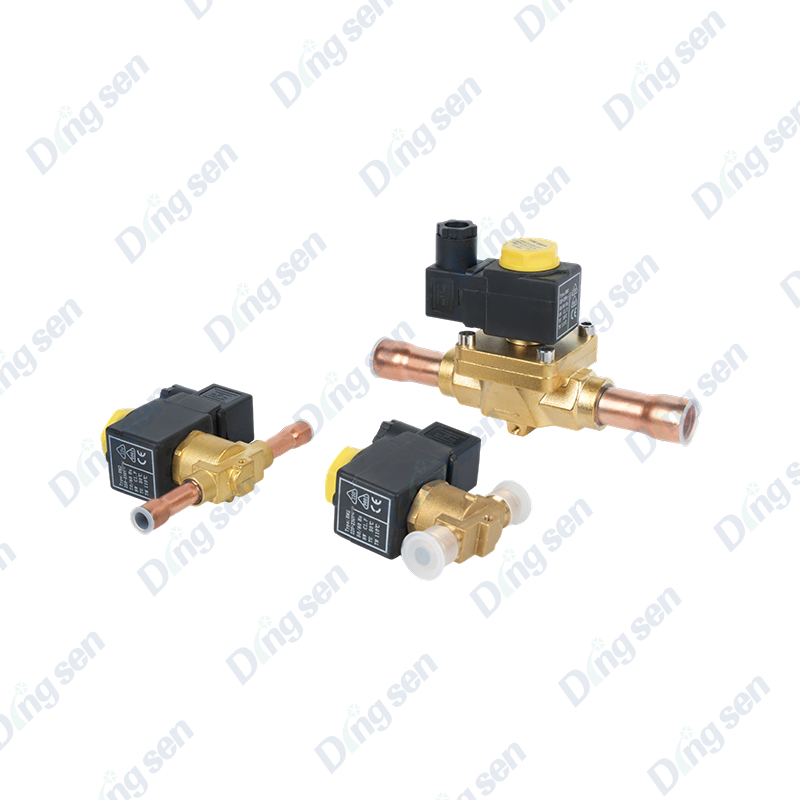 EVR solenoid valveEVR solenoid valves are key components in refrigeration and air conditioning, controlling the flow of refrigerant through electromagnetic induction. Available in direc...View Product →
Automotive air conditioning follows a different pattern. System pressures in R-134a and R-1234yf passenger cars usually sit between 12 and 25 bar, but CO2 systems running R-744 operate at 100 bar and above, which pushes valve bodies into the very high duty band. Those systems need high strength bodies and seals chosen for pressure and rapid temperature swings together.
Specification Mistakes That Cause Repeat Failures
Most warranty claims on high pressure solenoid valves come back to a small set of errors.
- Quoting maximum working pressure only and ignoring the derating curve.
- Choosing a valve whose MOPD is lower than the differential it will face in service.
- Assuming a seal that handles mineral oil will also handle POE or PAG oil.
- Mixing metric and imperial port sizes, or ordering ODF when the pipe is flare.
- Ignoring pressure drop at rated flow, which shows up later as lost cooling capacity.
- Forgetting that many high pressure valves are directional.
- Fitting a coil of the wrong voltage on site to get a machine running, then never correcting it.
A Selection Checklist You Can Send to a Supplier
A complete enquiry saves weeks of correspondence. The parameters below are the ones that change the part number.
| Parameter | Why it changes the part |
|---|---|
| Media and state | Liquid, discharge gas, or hot gas changes seal and orifice choice |
| Maximum working pressure | Sets the body and seal class |
| Maximum media temperature | Drives the derating factor and seal material |
| Maximum opening differential | Determines coil power and pilot design |
| Coil voltage and insulation class | Controls the electrical part number |
| Port size and connection type | ODF, flare, or threaded affects fit and leak risk |
| Seal material | Must suit the refrigerant and the lubricant |
| Flow coefficient and allowed pressure drop | Decides whether the circuit keeps its capacity |
| Ambient temperature | Affects coil temperature rise and enclosure choice |
Testing and Verification Before You Commit
Ask what the supplier tests, and on what share of production. A meaningful programme usually includes five checks.
- Nitrogen or helium leak test on every unit at 1.5 times maximum working pressure.
- Coil insulation resistance and dielectric strength testing.
- Cycle testing on samples, often to 100,000 operations or more.
- Burst testing on sample bodies to confirm the design margin.
- Flow testing to confirm the published flow coefficient.
Pressure protection is the other half of a safe high pressure circuit. A pressure controller or high pressure cut-out gives the system a way to stop when discharge pressure climbs past a set point, which protects the solenoid valve and the compressor together. Set the cut-out below the valve maximum working pressure, never at it.
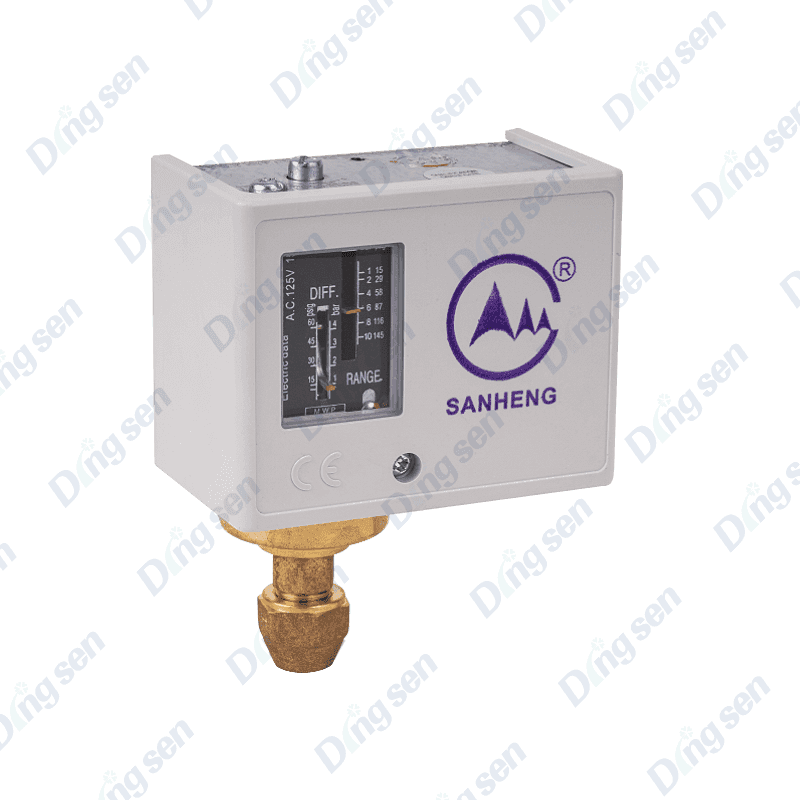 Refrigeration pressure controllerThe refrigeration pressure controller features a rectangular box with a white, corrosion-resistant plastic housing. Mechanical pointer pressure gauges on both sides of...View Product →
Choosing a Supplier for High Pressure Valves
Pressure ratings are easy to print on a datasheet. Consistency across a production run is the harder part, and it is the main reason to look closely at how a supplier tests and documents its work.
Shaoxing DingSen Refrigeration Technology Co., Ltd. has been manufacturing refrigeration and automotive air conditioning parts since 2008 from its base in Shaoxing, China, and exports mainly to Europe, the Americas, and Japan. The company runs its own test laboratory and states that it can develop and produce parts from customer drawings or samples, which matters when a standard high pressure valve does not quite fit an existing manifold. You can read more about the company and its quality approach, and its technical notes include a guide to EVR type solenoid valves and how they behave in service.
A high pressure solenoid valve repays careful specification. Line the body rating, the derating curve, the seal material, the coil class, and the opening differential up with your real operating envelope, and the valve becomes one of the least interesting parts of the machine, which is exactly what you want. Get one of those wrong and it becomes the part everyone remembers.
Before the next order, write down the parameters from the checklist above and send them to your supplier. If the reply comes back as a part number with no questions asked, that is worth noticing too.
-
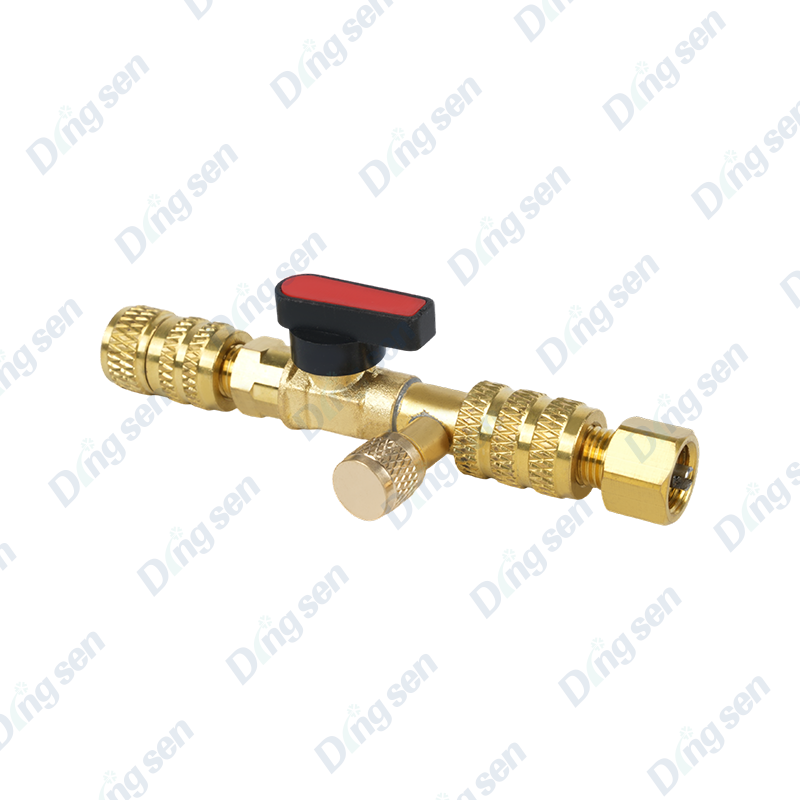
Valve core installation and removal tools are specialized tools for installing a...
-
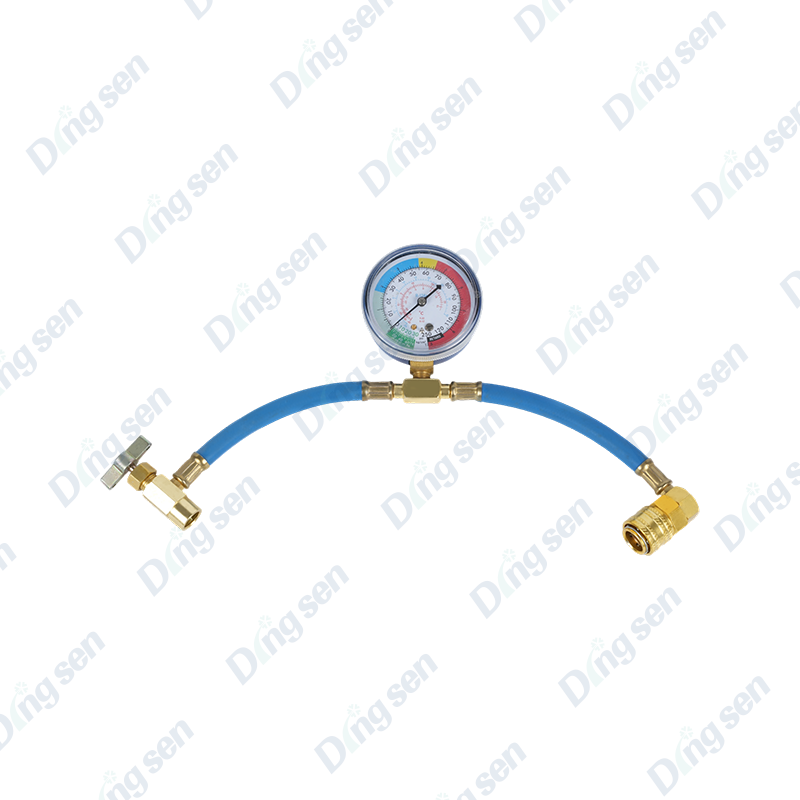
Pressure gauge automotive air conditioning filling system are designed specifica...
-
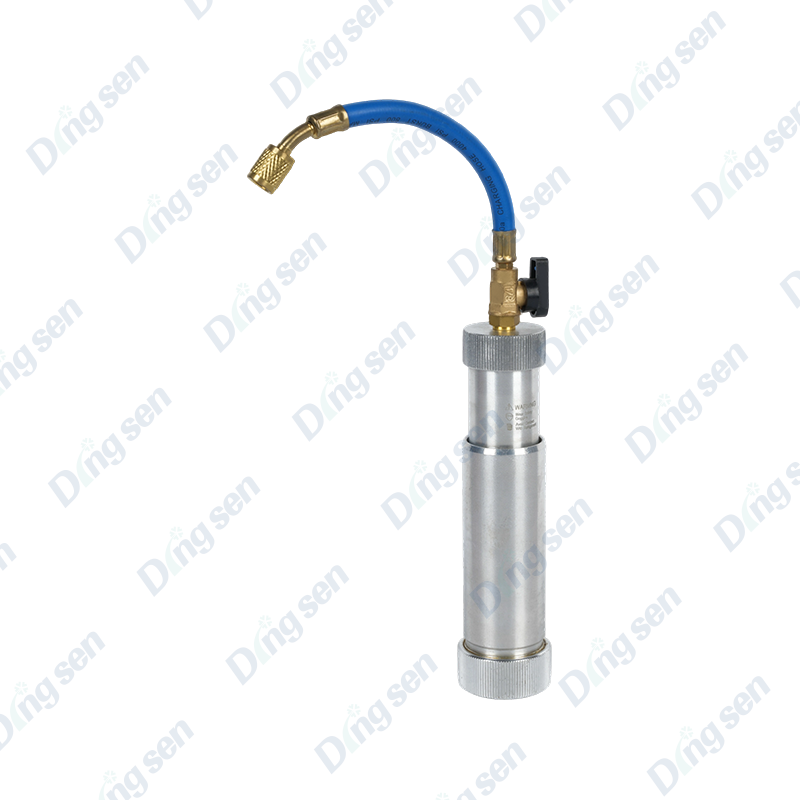
Refrigerant and refrigeration oil filler is a special device for replenishing me...
-
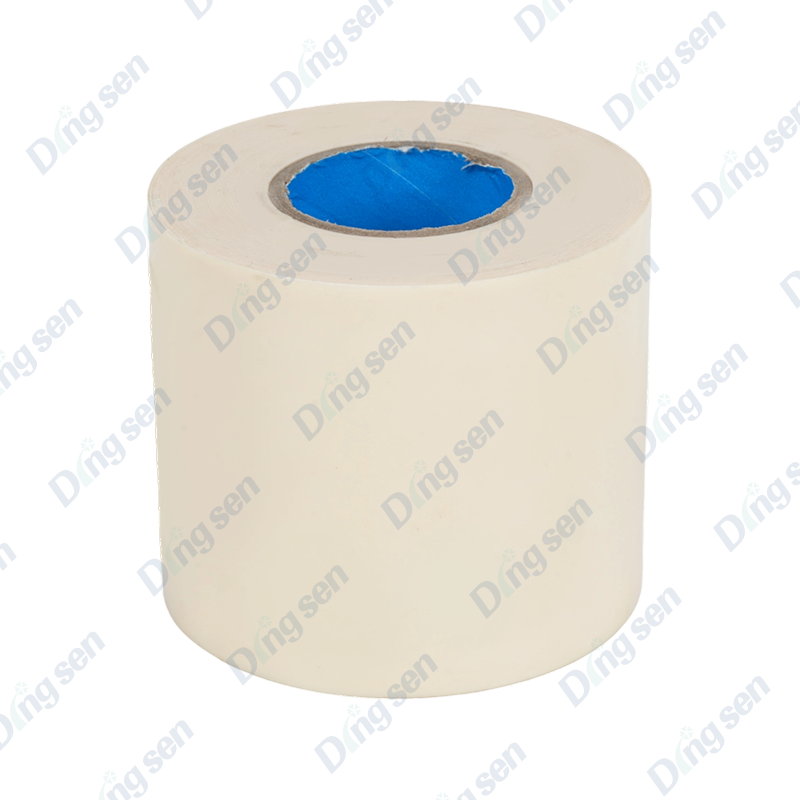
Air conditioning pipe bandage strip is used to secure and protect the pipes conn...
-
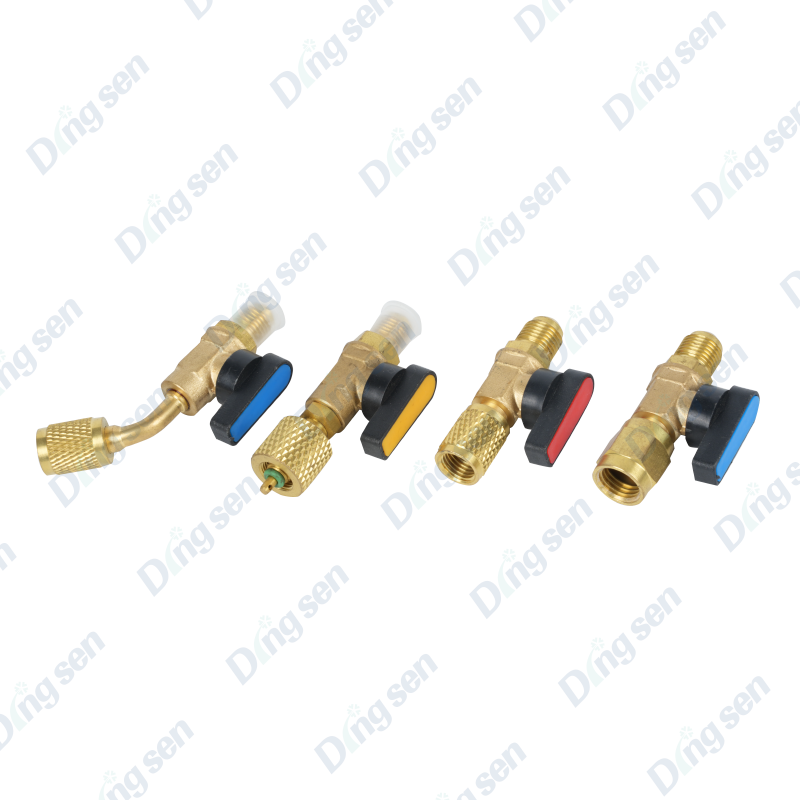
Charging Ball Valve is a core control component in the refrigeration, chemical, ...
-
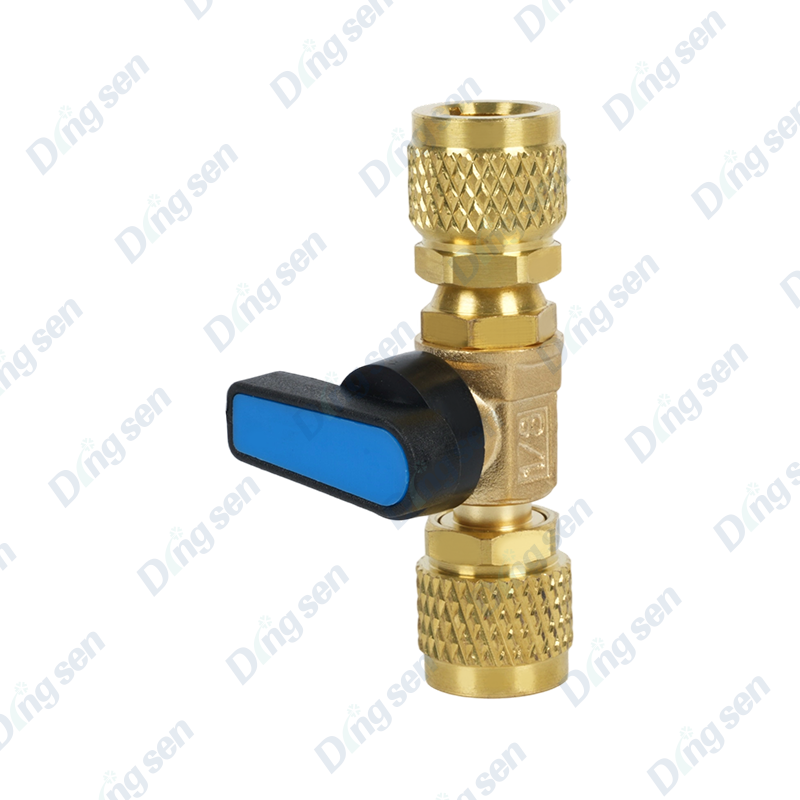
Air conditioning refrigerant ball valve are core components for fluid control in...

Contact Us
-

No. 109 Jiefang Road, Diankou Town, Zhuji City, Shaoxing, Zhejiang Province
-

+86-13867581196
-

Copyright © shaoxing DingSen Refrigeration Technology Co Ltd. All Rights Reserved
OEM Refrigeration Parts Manufacturer Custom Automotive AC Parts Factory