
 en
en  Español
 عربى
عربى
Fume Hood Airflow Monitors: Types, Calibration, and Field Hardware Support
A hood that reads 96 fpm on Monday and 78 fpm on Friday is not a rounding error. Face velocity that drifts below setpoint means containment is slipping, and the person leaning into the sash is usually the last to know.
Here is the short answer. Every chemical fume hood should carry a monitor that reads airflow in real time and alarms before containment is lost. The choice between analog and digital follows the mechanical system, not the price list. And no monitor is trustworthy until it has been calibrated on site, in the ductwork it actually serves. The rest of this page explains why each of those three points changes what you should buy.
Content
- 1 What a Fume Hood Airflow Monitor Actually Measures
- 2 Analog or Digital: Match the Monitor to the Mechanical System
- 3 Sash Height, Exhaust Volume and Alarm Setpoints
- 4 Calibration, Drift and the Annual Verification Cycle
- 5 The Hardware Behind the Reading
- 6 Choosing a Monitor: A Short Specification Checklist
What a Fume Hood Airflow Monitor Actually Measures
Monitors almost never measure containment itself. They measure a proxy, and the proxy decides how the device behaves when the room changes around it.
- Face velocity. Air speed across the sash opening, shown in feet per minute. A thermal anemometer mounted on the side wall or sash reads it directly.
- Pressure differential. The gap between duct or hood static pressure and room pressure. A pressure-based monitor infers flow from that gap and needs a stable reference to stay honest.
- Sash position. Many variable-air-volume systems combine sash height with velocity or flow, so the alarm fires only when the combination leaves the safe band.
Most facilities target about 100 fpm at a defined sash height and set the low alarm as a percentage of that target instead of a fixed number. Two identical monitors on two identical hoods can therefore show different numbers and both be correct.
Illustrative alarm response after a sash is raised (shorter bars are better)
Values are typical published figures for each architecture and should be confirmed with the supplier.
Response time matters more than steady-state accuracy at the moment a sash is raised, because the exposure window is measured in seconds. A hybrid VAV monitor with a sash sensor reacts fastest, since the sash movement itself is the trigger. Thermal anemometers follow closely, with a short delay while the element re-equilibrates to the new air speed. Pressure-based monitors tend to lag because duct pressure takes time to settle across the whole exhaust run. An analog dial is not a slow sensor, but the person reading it adds seconds of interpretation, especially during a busy procedure. Treat this comparison as a purchase test and ask the supplier to demonstrate response with your own sash movement before you sign.
Analog or Digital: Match the Monitor to the Mechanical System
A constant-volume hood with a fixed damper and a VAV hood with a modulating valve do not need the same electronics. Constant-volume hoods hold a steady flow, so a clear analog dial with a visible needle and a simple alarm is often enough. VAV hoods change exhaust volume as the sash moves, which means the monitor has to track a moving target, keep a record and usually report to a building management system. Fitting a digital monitor to a fixed-flow hood is not wrong, but it adds commissioning work. Fitting an analog dial to a VAV hood usually produces alarms that fire too late to protect anyone.
| Consideration | Analog monitor | Digital monitor |
|---|---|---|
| Display and record | Needle or dial, read at a glance, no data history | Numeric readout, often with logging or trend data |
| Typical accuracy | Wider tolerance band, affected by needle damping | Tighter band, depends on the sensor element |
| Alarm behaviour | Simple audible or visual alert | Configurable setpoints, relay output, BMS reporting |
| Hood type it suits | Constant-volume hoods with fixed dampers | VAV hoods and multi-hood laboratories |
| Calibration | Field zero and span adjustment | Field calibration plus sensor and firmware checks |
| Initial cost | Lower | Higher, plus commissioning time |
Sash Height, Exhaust Volume and Alarm Setpoints
Face velocity is exhaust volume divided by open sash area. On a four-foot-wide hood holding 100 fpm, that arithmetic is worth memorising, because it explains why one alarm setpoint behaves so differently from one hour to the next.
Exhaust volume needed to hold 100 fpm on a four-foot-wide hood
Each column shows the exhaust volume a four-foot-wide hood needs to hold 100 fpm at that sash opening. The relationship is linear in area, so doubling the opening doubles the air the fan must move. This is why a VAV hood cuts flow as the sash closes, since the same containment is achieved with less conditioned air pulled out of the building. It is also why an alarm set at a fixed exhaust volume is unreliable across sash positions, while a velocity-based alarm travels with the opening. When you compare monitor quotes, ask how each device handles a partly closed sash, and check the answer against your own hood width and sash travel.
Calibration, Drift and the Annual Verification Cycle
No airflow monitor leaves the factory holding a valid calibration for your hood. The sensor can be bench-tested anywhere, but the number it reports depends on duct geometry, fan curve, room pressure and probe position, none of which exist until the hood is installed. Calibrating in the field against a reference anemometer or a flow station is the only way to make the displayed value mean something.
Drift is normal and slow. Thermal sensors collect dust, pressure taps partly block, and probes shift when maintenance works around them.
Deviation from setpoint over twelve months after calibration
Months after calibration. Dark line: routine recalibration cycle. Light line: calibrated once and left alone.
The shaded band is the tolerance most facilities accept around the setpoint for routine work, and both traces start inside it on the day of calibration. The dark trace belongs to a monitor that is recalibrated on a routine cycle, so its deviation stays small and predictable. The light trace belongs to a monitor that was calibrated once at commissioning and then left alone. Its reading drifts steadily downward, and by month twelve the instrument is reporting a velocity the hood is no longer delivering. That gap is the real risk, because the display still looks normal to the person using the hood. An annual verification cycle catches the drift long before it reaches the alarm threshold.
The Hardware Behind the Reading
Every monitor sits at the end of a small mechanical chain. Pressure taps, tubing runs, isolation valves and the gauges technicians use to verify a reading all decide whether the displayed number matches what the hood is really doing.
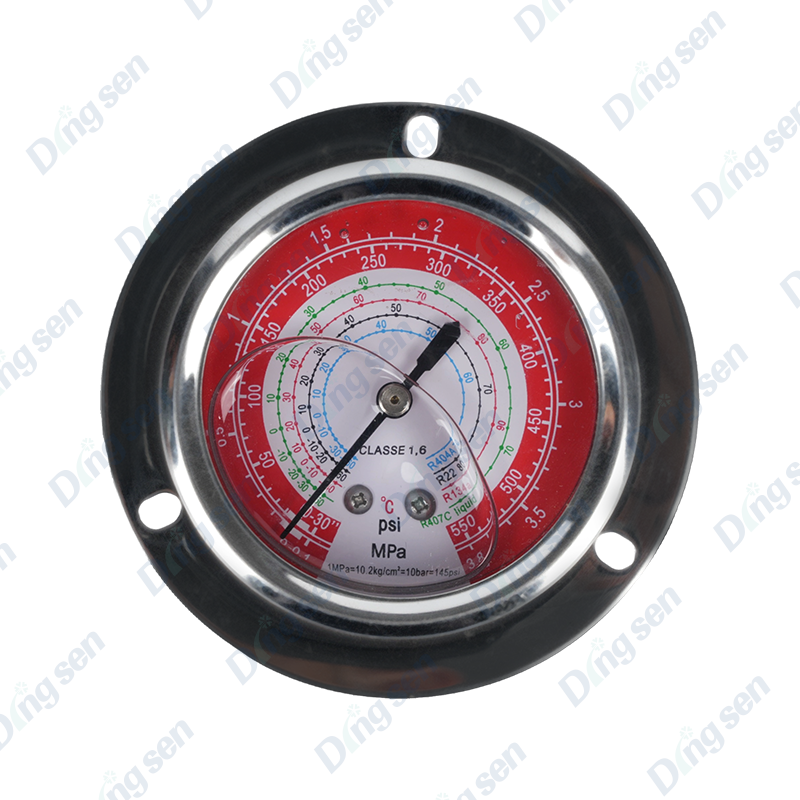 Oil-Filled Pressure Gauge for Vibration-Damped Pressure MonitoringLiquid damping keeps the pointer readable amid compressor or air-handler vibration, making it a practical verification gauge for pressure taps and panel-mounted monitoring chains.View Product →
A gauge that damps vibration keeps a needle readable on a hood standing next to a compressor or an air handler. Liquid-filled gauges are the usual choice wherever vibration and pressure pulses would otherwise blur the pointer, and the same logic applies to any panel-mounted verification gauge near moving plant.
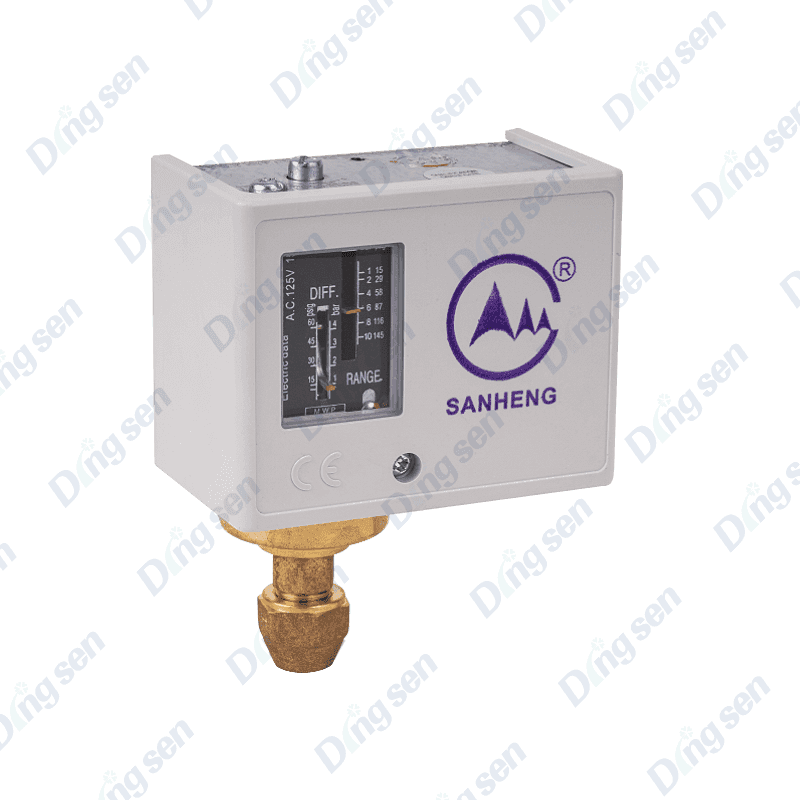 Refrigeration Pressure Controller with Mechanical Pointer and Auto ResetAdds an independent mechanical safeguard to a monitoring loop, with high/low pressure sensing and automatic reset that can help prevent abnormal-pressure equipment damage.View Product →
Control hardware matters just as much. A pressure controller with an adjustable setpoint and a clean switching action gives the monitoring loop a second, independent line of defence, so an alarm can still fire if the electronic sensor or its cable fails.
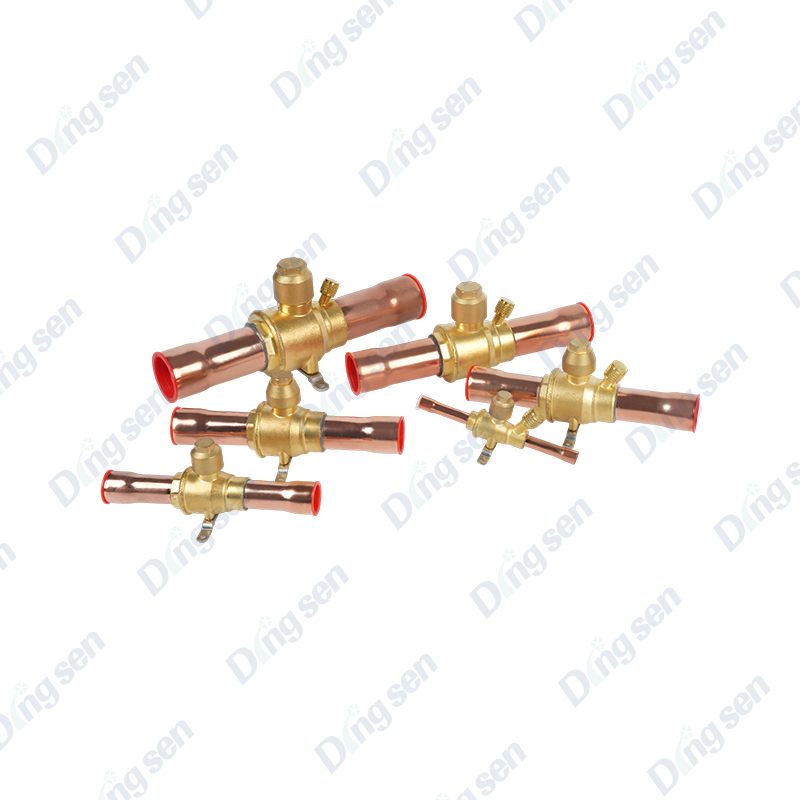 GBC Ball Valve for Refrigeration Flow Isolation and BalancingA manually operated, bidirectional shut-off valve that supports calibration isolation and throttling on liquid, suction, or hot gas lines without a full system shutdown.View Product →
Isolation and balancing valves complete the chain. A ball valve lets a technician shut a pressure line for calibration without disturbing the rest of the system, and a partly throttled valve can balance two taps that share one reference. Without them, every calibration visit turns into a full shutdown.
Leak-tight connections hold it all together. A slow leak at a compression joint shows up as a drifting reading rather than a visible fault, which is exactly the kind of error that gets blamed on the sensor. Buying components built to drawings and checked before shipment removes most of that risk, which is the working method of the same factory behind these parts. Since 2008 the company has produced refrigeration and air-conditioning components and builds custom fittings to customer samples and drawings, which is useful when a hood monitoring project needs a non-standard tap or adapter.
Choosing a Monitor: A Short Specification Checklist
Three architectures cover most laboratories. Constant-volume analog, digital VAV with a sash sensor and pressure-based digital each trade cost against reaction speed and record-keeping.
Comparing three monitor architectures across five practical criteria
The radar plot compares three common architectures against five practical criteria rather than against a single specification. Digital VAV with a sash sensor leads on accuracy, response and alarm clarity, but it carries the highest initial cost and the most commissioning work. Constant-volume analog scores well on price and maintenance while giving up speed and record-keeping. Pressure-based digital sits in the middle on most axes, which is why it is often chosen for retrofits where duct access is limited. Read the chart as a trade-off map, not a ranking, because the best choice depends on the axis your facility cannot compromise on. If a hood runs continuously with a fixed damper, the analog option rarely causes problems. If the same lab runs several VAV hoods on one fan, the response and logging advantages of a digital monitor usually justify the extra cost.
- Confirm the hood type and whether exhaust volume is fixed or modulating.
- Ask for alarm response time measured on a hood of your size, not on a bench.
- Require a written field calibration procedure with a stated tolerance band.
- Check how the monitor reports to the building management system, if at all.
- Verify that tubing, taps, gauges and isolation valves are included in the quote.
- Book the first annual verification date before installation, not after.
A monitor is only as good as the loop it belongs to: a sensor that reacts, a setpoint that suits the sash, and a calibration that happens in the field rather than on paper. Get those three right and the display becomes something the lab can actually rely on. If you are specifying pressure taps, isolation valves or verification gauges for a hood monitoring project, send the drawings and specifications to our team and we will quote the mechanical side of the loop.
-
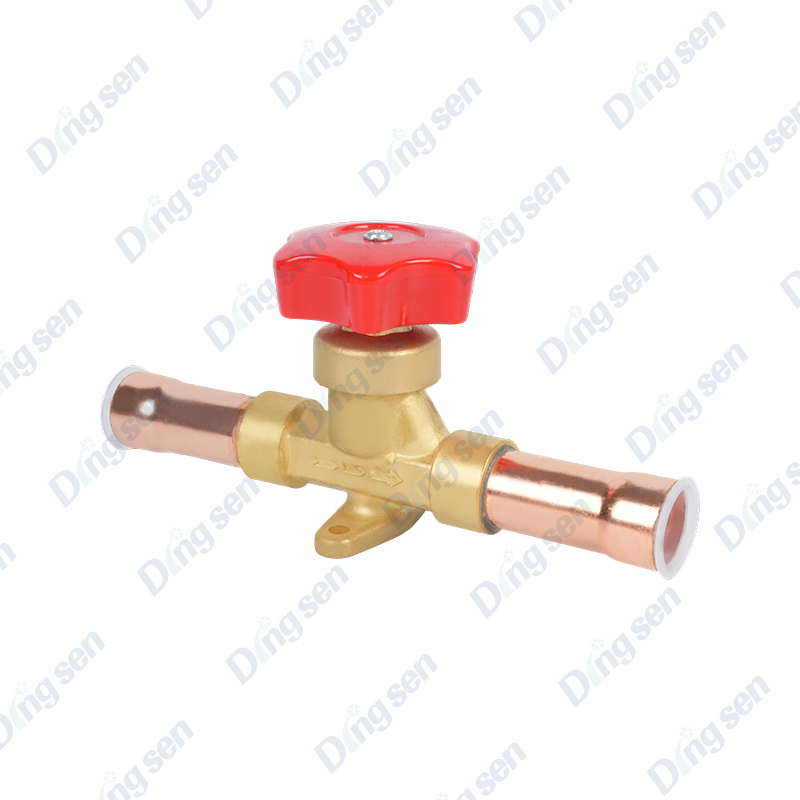
Diaphragm-type hand valves are manual flow control components for refrigeration ...
-
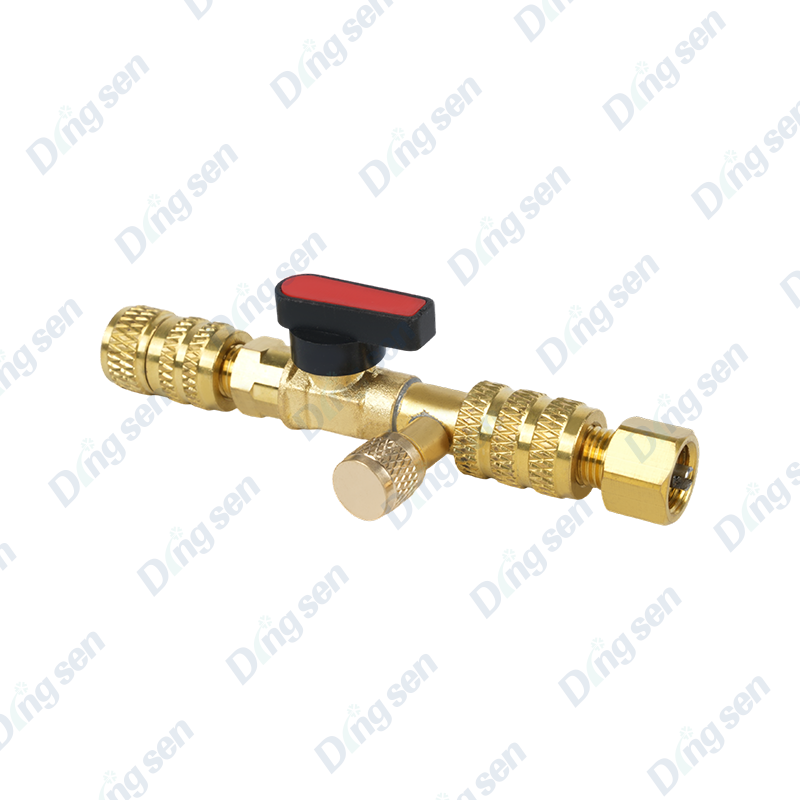
Valve core installation and removal tools are specialized tools for installing a...
-
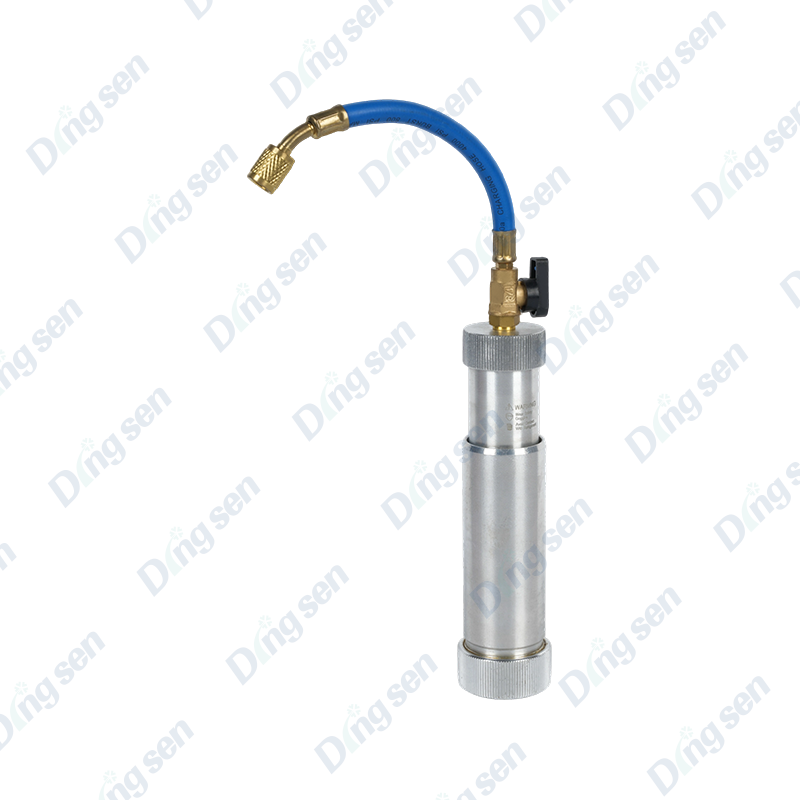
Refrigerant and refrigeration oil filler is a special device for replenishing me...
-
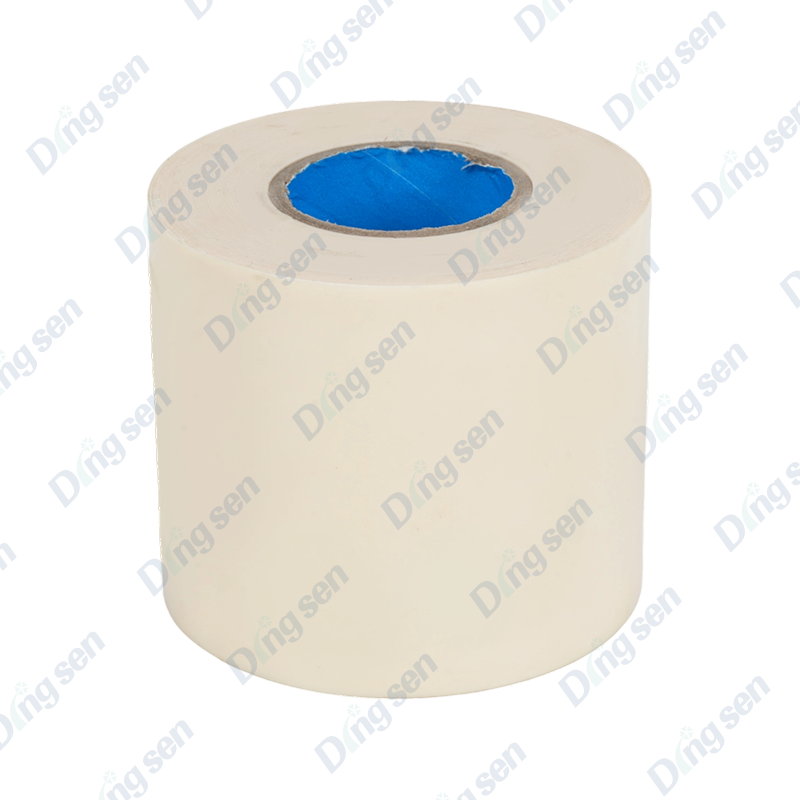
Air conditioning pipe bandage strip is used to secure and protect the pipes conn...
-
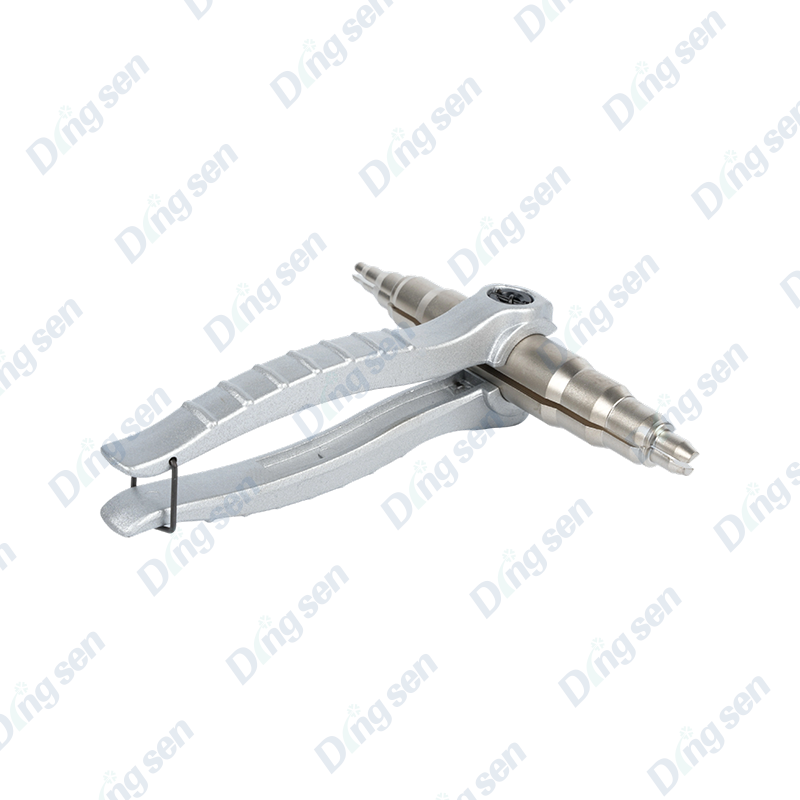
The copper tube expander is a specialized tool for copper tube connection. It ex...

Contact Us
-

No. 109 Jiefang Road, Diankou Town, Zhuji City, Shaoxing, Zhejiang Province
-

+86-13867581196
-

Copyright © shaoxing DingSen Refrigeration Technology Co Ltd. All Rights Reserved
OEM Refrigeration Parts Manufacturer Custom Automotive AC Parts Factory