
 en
en  Español
 عربى
عربى
What is a tire valve core wrench?
A tire valve core wrench is a specialized hand tool designed to remove and install the small valve core located inside a tire's valve stem. The valve core is the tiny pin-and-spring assembly that seals air inside the tire — and replacing or servicing it requires a precision tool that can fit inside the narrow valve stem, grip the hexagonal base of the core, and turn it without slipping or causing damage. That is exactly what a valve core wrench is built to do.
Without this tool, servicing a leaking or damaged valve core is nearly impossible without deflating the entire tire or damaging the stem. With it, a single technician can complete a valve core replacement in under a minute. Valve core wrenches are used on cars, trucks, motorcycles, bicycles, and commercial vehicles, making them an essential item in any vehicle toolkit, auto repair shop, or roadside emergency kit.
Content
- 1 Understanding the Tire Valve Core and Why It Needs a Dedicated Wrench
- 2 Construction and Materials: What Makes a Quality Valve Core Wrench
- 3 Types of Tire Valve Core Wrenches
- 4 Compatible Valve Core Standards: TR413, TR415, and More
- 5 How to Use a Tire Valve Core Wrench: Step-by-Step
- 6 When You Need to Use a Tire Valve Core Wrench
- 7 Vehicle Applications: Where Valve Core Wrenches Are Used
- 8 Choosing the Right Valve Core Wrench: Key Selection Criteria
- 9 Common Mistakes to Avoid When Using a Valve Core Wrench
- 10 The Value of Professional-Grade Tire Service Tools
- 11 Summary: What to Remember About Tire Valve Core Wrenches
Understanding the Tire Valve Core and Why It Needs a Dedicated Wrench
To fully appreciate why a valve core wrench exists, it helps to understand what the valve core is and the mechanical challenges involved in servicing it.
What Is a Valve Core?
The valve core — also called a Schrader valve core — is a miniature threaded valve assembly that sits inside the valve stem of a pneumatic tire. It consists of a small metal pin surrounded by a rubber sealing gasket and a spring mechanism. When you press on the pin (as happens when you attach an air pump or pressure gauge), the spring compresses and allows air to flow in or out. When pressure is released, the spring forces the pin back against the seat, creating an airtight seal.
The valve core screws into the valve stem via fine threads with a very small thread diameter — typically around 8mm outer diameter for standard Schrader valve cores. Its hexagonal base is designed to accept a wrench, but the confined space of the valve stem means that only a tool with a narrow, precisely machined head can reach and engage it properly.
Why Common Tools Cannot Do the Job
The valve core's location — recessed inside the valve stem — rules out most general-purpose tools:
- Standard pliers are too wide to fit inside the valve stem and would crush or distort the valve body.
- Flathead screwdrivers can engage the slot on some cores but apply uneven force, risking thread damage.
- Fingers alone cannot generate sufficient torque to fully tighten a valve core, leading to air leaks over time.
- Improper tools risk cross-threading, which permanently damages the valve stem and may require stem replacement.
A proper valve core wrench eliminates all these risks by providing precise engagement, controlled torque, and a secure grip matched exactly to the geometry of the valve core.
Construction and Materials: What Makes a Quality Valve Core Wrench
Not all valve core wrenches are created equal. The quality of the materials and manufacturing process directly determines how long the tool lasts, how reliably it grips the valve core, and whether it maintains its precision over years of use.
Chrome-Vanadium Steel: The Material Standard
Premium valve core wrenches are forged from chrome-vanadium (Cr-V) steel, an alloy renowned in the professional tool industry for its combination of hardness, toughness, and resistance to deformation under high torque. Chrome-vanadium steel contains:
- Chromium: Increases hardness, improves corrosion resistance, and strengthens the steel matrix.
- Vanadium: Refines the grain structure of the steel, increasing toughness and resistance to cracking under impact or repetitive stress.
The combination produces a tool that can be machined to fine tolerances — essential for the small hexagonal clamping head — while maintaining the strength to apply firm torque without flexing or snapping. Compared to tools made from standard carbon steel, Cr-V valve core wrenches exhibit significantly longer service life and maintain their dimensional accuracy after thousands of uses.
Forging vs. Casting: Why Forging Matters
Quality valve core wrenches are manufactured by forging — a process in which heated steel is shaped under high pressure — rather than casting (pouring molten metal into a mold). Forging aligns the grain structure of the steel along the shape of the tool, producing a denser, stronger part with no internal voids or porosity. Cast tools are cheaper to produce but are more brittle and prone to fracturing under the sudden torque forces involved in removing a seized valve core.
The Clamping Head: Precision Is Everything
The clamping head of a valve core wrench is its most critical functional element. It is machined to conform precisely to the hexagonal geometry of the valve core base, ensuring full face contact on all six sides of the hex. This full-face engagement:
- Prevents the tool from slipping during rotation, which can round off the corners of the valve core's hex head and make it impossible to remove later
- Distributes torque evenly across the valve core, reducing the risk of cracking or deforming the core body
- Allows maximum torque to be applied within the confined space of the valve stem without requiring excessive handle force
The head must also be narrow enough in overall diameter to fit inside the bore of the valve stem cap thread area — typically working within a space of approximately 6 to 8 mm inner diameter. This dimensional constraint is why a dedicated valve core wrench is necessary rather than an adaptation of a larger tool.
Handle Design: Grip, Ergonomics, and Torque Control
The handle design of a valve core wrench affects both user comfort and the precision of torque application. Key handle features in professional-grade tools include:
- Non-slip surface treatment: Knurled metal handles or rubberized grip overmolds prevent the tool from slipping in gloved or oily hands — common conditions in automotive repair environments.
- Ergonomic diameter: Handle diameter is balanced to allow comfortable rotation without excessive wrist strain. Too thin reduces grip comfort; too thick reduces fine-rotation control.
- T-bar or cross-handle configuration: Some professional models use a T-shaped handle that provides two points of grip for greater torque application when removing seized or over-tightened valve cores.
Types of Tire Valve Core Wrenches
Several distinct designs of valve core wrench are available, each suited to different use contexts and user preferences. Understanding the available types helps in selecting the right tool for the job.
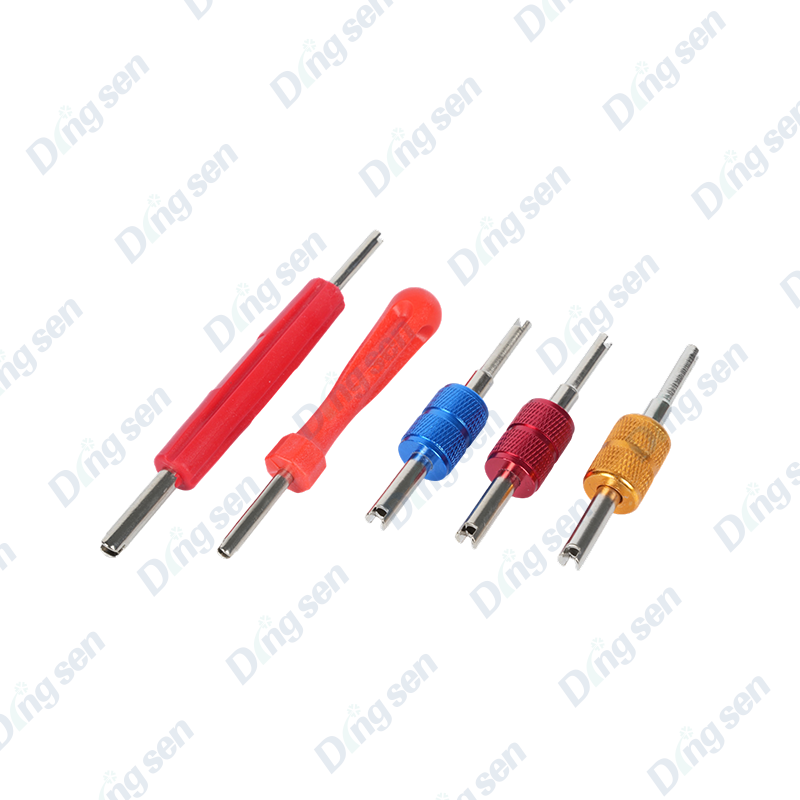
Standard Single-End Wrench
The most basic and widely used design — a simple straight handle with a single valve core socket at one end. Compact, lightweight, and inexpensive, these are the standard tool included in tire repair kits and valve stem service sets. They are appropriate for occasional home use and for carrying in a vehicle emergency kit.
Double-End (Dual-Head) Wrench
A double-end wrench provides two different socket sizes on opposite ends of the same handle, accommodating the two most common valve core sizes without requiring a separate tool. This design is particularly popular among professional technicians who work with both passenger car and commercial vehicle tires, where different valve core standards may apply.
T-Handle Valve Core Wrench
The T-handle design uses a perpendicular crossbar as the grip, giving the user maximum mechanical advantage when applying torque. This is especially useful for removing valve cores that have become corroded or seized due to prolonged exposure to moisture and road contaminants. The T-handle allows both hands to apply force simultaneously, reducing the risk of the working end slipping.
Magnetic Valve Core Wrench
An increasingly popular design incorporates a magnetic element in or around the clamping head. The magnet holds the valve core firmly against the tool after removal, preventing it from falling into the tire interior or onto the floor — a common and frustrating problem with standard wrenches, particularly when working overhead (such as on truck tires mounted at height) or in poor lighting. The magnetic grip also assists in positioning and aligning a new valve core during installation, improving accuracy and speed.
Multi-Function Combination Tool
Some valve core wrenches are part of a combination tool that includes additional functions — such as a valve stem installer, a cap storage compartment, or a tire pressure gauge in the handle. These multi-function designs reduce the number of separate tools needed during a tire service session and are popular for roadside emergency kits where space and weight are at a premium.
Compatible Valve Core Standards: TR413, TR415, and More
One of the most important practical aspects of selecting a valve core wrench is ensuring compatibility with the valve cores actually used on the vehicle being serviced. Valve cores are manufactured to several industry standards, and not all wrenches accommodate all sizes.
| Valve Core Standard | Valve Stem Type | Typical Application | Key Characteristics |
|---|---|---|---|
| TR413 | Rubber snap-in | Passenger cars, light trucks, SUVs | Most common standard; short stem; max pressure ~65 PSI |
| TR415 | Rubber snap-in (extended) | Passenger cars, motorcycles | Longer stem than TR413; improved accessibility on deep-dish wheels |
| TR416 | Rubber snap-in | Tubeless tires, SUVs | Wider base; higher load rating than TR413 |
| TR418 | Rubber snap-in (extra long) | Motorcycles, specialty applications | Extended reach for recessed valve access |
| TR500 / TR501 | Metal bolt-in | Heavy trucks, commercial vehicles, TPMS-equipped vehicles | High pressure rating; metal stem; durable in harsh conditions |
| Bicycle / Presta | Narrower threaded stem | Road and mountain bicycles | Different thread standard; requires dedicated Presta valve tool |
A quality universal valve core wrench accommodates the TR413 and TR415 families — the two most prevalent standards across passenger vehicles globally — as standard capability. Professional shop tools often cover a wider range, including metal bolt-in stems used on commercial trucks, eliminating the need for multiple specialized tools.
How to Use a Tire Valve Core Wrench: Step-by-Step
Using a valve core wrench correctly ensures clean removal and installation without damaging the valve stem, core, or tire. The following procedure applies to both removal and installation of a standard Schrader-type valve core.
Removing a Valve Core
- Release tire pressure: Before removing the valve core, release air pressure from the tire using the valve pin depressor. Attempting to unscrew a valve core under full pressure will cause rapid air release that can eject the core at high speed — a safety hazard. Depressing the valve to release air before removal is essential.
- Remove the valve cap: Unscrew the dust cap from the valve stem and set it aside in a safe location where it will not be lost.
- Insert the wrench head: Carefully insert the clamping head of the valve core wrench into the valve stem bore. The head should slide in smoothly — if resistance is felt, verify alignment before forcing the tool, as misalignment can damage the valve stem threads.
- Engage the valve core: Push the wrench head gently forward until it fully engages the hexagonal base of the valve core. You should feel a firm seating as the hex socket contacts all six faces of the valve core head.
- Turn counter-clockwise: Rotate the wrench counter-clockwise (left-hand thread — the standard for valve cores) to loosen and remove the core. Apply steady, controlled pressure. If the core is seized, apply penetrating lubricant to the stem exterior and allow it to work for several minutes before retrying.
- Withdraw and retain: Once the core is free, carefully withdraw it from the valve stem. If using a magnetic wrench, the core will be held against the tool head. If using a standard wrench, place the removed core immediately in a container to prevent loss.
Installing a New Valve Core
- Inspect the valve stem: Before installing the new core, inspect the valve stem bore for any debris, corrosion, or thread damage. Clean if necessary with a lint-free cloth or compressed air.
- Seat the new core on the wrench: Place the new valve core onto the wrench head. A magnetic wrench holds the core automatically; for non-magnetic designs, carefully balance the core in the socket opening.
- Insert into the valve stem: Guide the wrench with the core attached into the valve stem bore. Start the threads by hand, turning clockwise, applying only finger pressure until the core begins to thread in smoothly. This prevents cross-threading.
- Tighten with the wrench: Once hand-started, use the wrench to tighten the core firmly. Standard recommended torque for a valve core is approximately 2 to 3 inch-pounds (0.23 to 0.34 Nm) — snug but not overtightened. Overtightening can crack the valve core body or damage the stem threads.
- Test for leaks: After installation, inflate the tire to the correct pressure and apply a small amount of soapy water around the valve stem. Bubbles indicate a leak — if present, tighten the core slightly or inspect for a damaged sealing rubber.
- Replace the valve cap: Reinstall the valve dust cap. The cap provides a secondary seal and prevents debris and moisture from entering the valve stem.
When You Need to Use a Tire Valve Core Wrench
Understanding the specific situations that require a valve core wrench helps vehicle owners and technicians recognize when this tool is needed and why having it on hand matters.
Slow Leak from the Valve Stem Area
If a tire consistently loses pressure but no puncture is found in the tread area, the valve core is often the culprit. Valve core rubber seals deteriorate over time from exposure to UV radiation, ozone, temperature cycling, and chemical contaminants. A worn or damaged valve core allows air to escape past the sealing surface, even when the valve appears fully closed. Replacing the valve core — a job that takes less than two minutes with the right tool — solves the leak without requiring the tire to be dismounted from the rim.
Installing Tire Sealant or Inflating Through the Valve
When injecting liquid tire sealant (for flat prevention), nitrogen, or specialty gases into a tire through the valve stem, the valve core is often temporarily removed to allow fast, unrestricted flow. Once the process is complete, the core is reinstalled. This procedure requires a valve core wrench for both removal and reinstallation.
TPMS (Tire Pressure Monitoring System) Service
Modern vehicles equipped with TPMS sensors often require valve core replacement as part of routine TPMS maintenance. When a TPMS sensor battery dies or a sensor is damaged, the associated valve assembly — including the valve core — is typically replaced. This is a standard service procedure at tire shops that requires a valve core wrench as a primary tool.
Tire Mounting and Dismounting
Professional tire mounting procedures include removing the valve core before dismounting the tire bead from the rim, allowing rapid and complete air evacuation. Reinstallation of a fresh valve core after mounting is standard practice, ensuring the new tire assembly starts service with a fresh, properly sealing core rather than one that may have been stressed during the dismounting process.
Preventive Maintenance
Many professional tire shops and fleet maintenance operations include valve core replacement as part of routine tire rotation or seasonal tire changeover services. Since valve cores are inexpensive — typically costing a few cents to under one dollar each — replacing them proactively at every tire change interval is cost-effective insurance against slow leaks developing during service.
Vehicle Applications: Where Valve Core Wrenches Are Used
The valve core wrench is one of the most broadly applicable tire service tools available, serving across virtually every category of pneumatic-tire vehicle.
| Vehicle / Application | Typical Valve Core Type | Service Frequency | Notes |
|---|---|---|---|
| Passenger cars and SUVs | TR413 / TR415 (rubber) | Every tire rotation or 2–3 years | Most common application; TPMS valve cores often included |
| Light trucks and vans | TR413 / TR416 (rubber) | Every tire rotation or 2 years | Higher payload increases seal stress; more frequent replacement advisable |
| Heavy trucks and buses | TR500 / TR501 (metal) | Every tire change / overhaul | High-pressure applications; metal bolt-in stems; requires robust wrench |
| Motorcycles | TR415 / TR418 (rubber) | Annually or at tire change | Extended stems common; precise head access essential |
| Bicycles (Schrader-equipped) | Standard Schrader | As needed / leak repair | Many mountain bike and hybrid bike models use Schrader valves |
| Agricultural and construction equipment | Metal bolt-in (heavy duty) | Maintenance intervals | Large tires, high pressure, demanding conditions |
Choosing the Right Valve Core Wrench: Key Selection Criteria
With a range of valve core wrenches available at different price points and quality levels, selecting the right tool requires considering several practical factors.
Material Quality and Construction
As discussed above, chrome-vanadium steel is the benchmark material for a professional-grade valve core wrench. Avoid tools described only as "steel" without specifying alloy type — these are typically lower-carbon tools that deform more easily under torque. The clamping head in particular should be machined to tight tolerances; any visible play between the head and a valve core it is tested against indicates inferior manufacturing precision.
Compatibility Coverage
For general automotive use, a wrench that accommodates both TR413 and TR415 valve cores covers the vast majority of passenger vehicle applications. If servicing commercial vehicles or specialized applications, verify compatibility with the larger metal stem core sizes before purchasing. A dual-head or universal design offers the broadest coverage in a single tool.
Magnetic vs. Non-Magnetic
For professional shop use and for situations where dropping a valve core would be problematic — working on elevated vehicles, on ladders, or in tight engine bays — the magnetic design is strongly recommended. The modest price premium over non-magnetic versions is quickly justified by the time saved retrieving dropped cores and the frustration avoided.
Handle Design for Intended Use
- Occasional home use: A compact straight-handle wrench is adequate and easy to store in a glove box or tire repair kit.
- Professional shop use: A T-handle or dual-end wrench with a comfortable ergonomic grip reduces hand fatigue during repetitive operations.
- Emergency kit use: The lightest and most compact option that covers the intended vehicle's valve type — weight and size matter in an emergency kit context.
Finish and Corrosion Resistance
A quality finish protects the wrench from corrosion during storage and extends service life. Look for chrome-plated, nickel-plated, or black oxide finishes on the metal surfaces. Chrome-vanadium tools with a mirror-polished chrome finish are the most durable and easiest to clean of lubricants and tire contaminants.
Common Mistakes to Avoid When Using a Valve Core Wrench
Even with the right tool, a few common errors can lead to damaged valve stems, lost components, or ineffective repairs. Awareness of these mistakes helps ensure every valve core service is completed correctly.
- Removing the core under full pressure: Always release tire pressure fully before attempting to unscrew the valve core. A valve core under significant pressure can be ejected from the stem forcefully when the threads disengage — causing injury and instant complete deflation.
- Cross-threading during installation: Always start the valve core threads by hand before using the wrench. If resistance is felt immediately when starting, remove the core and try again rather than forcing — forcing a misaligned core will permanently damage the valve stem threads, requiring full valve stem replacement.
- Overtightening: The valve core seat is a delicate rubber component. Overtightening does not improve the seal and risks cracking the core body or distorting the rubber seal. Tighten firmly but stop when resistance is felt — approximately 2 to 3 inch-pounds is sufficient.
- Using a worn or undersized wrench: A wrench head that no longer precisely fits the valve core hex will slip during rotation, rounding off the hex corners and making the core impossible to remove with any tool. Always use a properly fitting, undamaged wrench head.
- Forgetting to reinstall the valve cap: The valve cap is more than cosmetic — it provides a secondary seal and protects the valve core from moisture, debris, and road salt. Always replace the cap after servicing the valve core.
The Value of Professional-Grade Tire Service Tools
The tire valve core wrench exemplifies a category of precision tools where the difference between a cheap generic product and a quality-manufactured instrument has direct, measurable consequences in the field. A tool that slips during removal rounds off valve cores that then become impossible to extract. A tool made from inferior steel deforms after a few uses, losing the dimensional accuracy essential to its function.
Manufacturers specializing in automotive and refrigeration accessories — with a focus on precision-engineered components for demanding service environments — bring the same standards to small hand tools that they apply to complex system components. High-strength material selection, precision machining, and rigorous quality control are not optional extras in professional tooling — they are the baseline requirements that determine whether a tool performs reliably across years of daily use or fails after a few sessions.
For vehicle owners, the valve core wrench represents a modest investment — typically a few dollars to under twenty dollars for a quality single tool — that can prevent the significantly higher cost of damaged valve stems, improper repairs, or roadside breakdowns from unresolved slow leaks. For professional tire shops and fleet maintenance operations, having reliable, precision valve core wrenches available at every service bay is a basic operational requirement.
Summary: What to Remember About Tire Valve Core Wrenches
A tire valve core wrench is a small but essential precision tool for anyone who maintains vehicles with pneumatic tires. Here are the key takeaways:
- It is the only tool that can properly remove and install valve cores without risking damage to the valve stem or core.
- Chrome-vanadium steel construction ensures durability, precision, and resistance to deformation over years of use.
- Quality models accommodate the most common valve core standards — TR413 and TR415 — covering the vast majority of passenger vehicles.
- Magnetic designs prevent the frustrating loss of valve cores during removal — a feature strongly recommended for professional and high-frequency use.
- Applications span all vehicle types — cars, trucks, motorcycles, bicycles, and commercial vehicles — making it a universal addition to any automotive toolkit.
- Correct technique — including always releasing pressure before removal and starting installation threads by hand — ensures safe, damage-free valve core service every time.
-
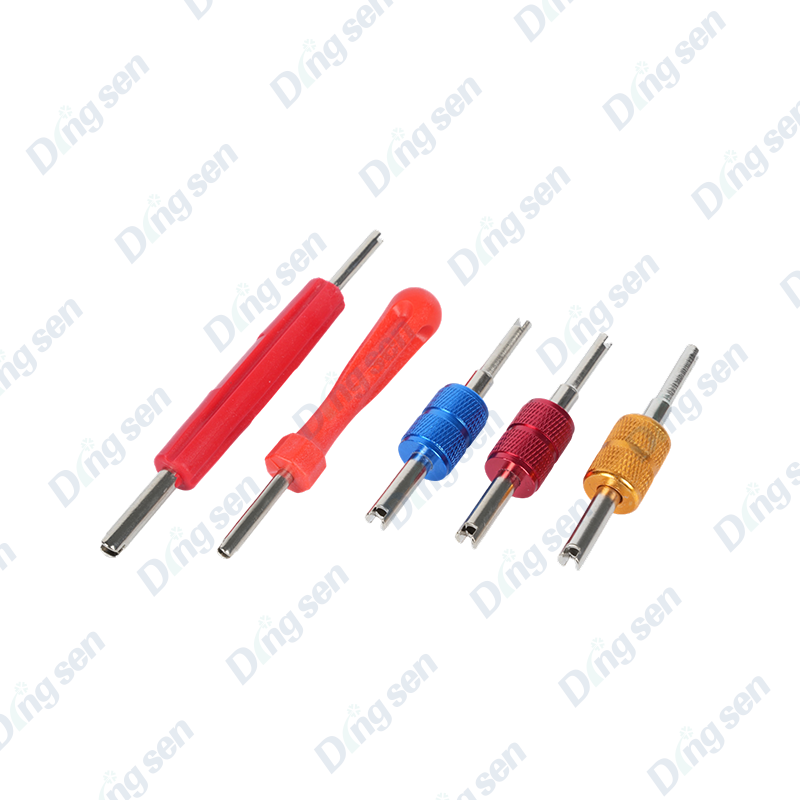
The tire valve core wrench is a specialized tool for removing and installing val...
-
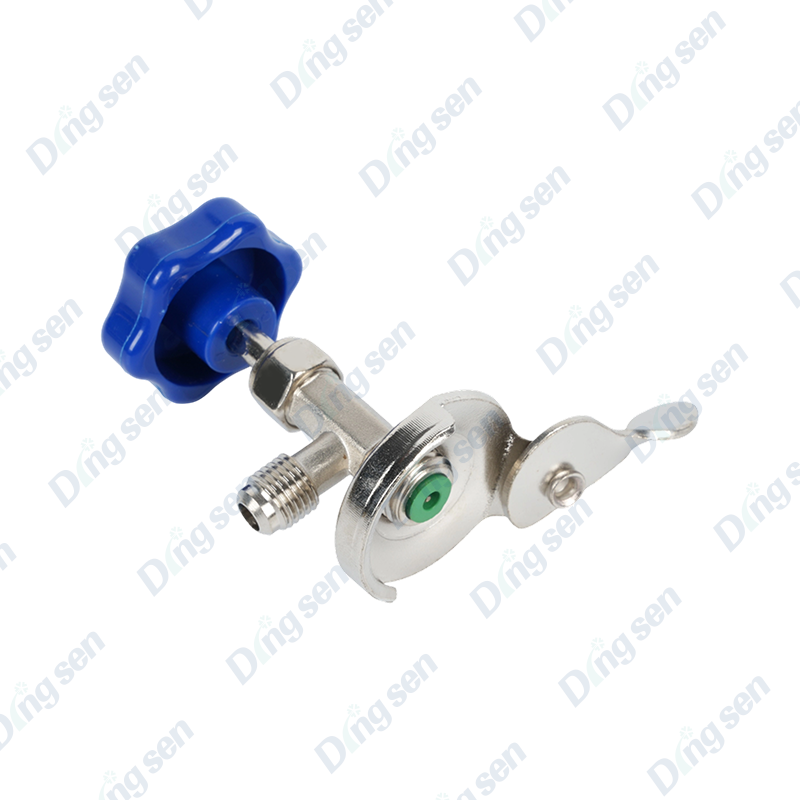
The dispensing valve refrigerant bottle opener is a metal valve-style bottle ope...
-
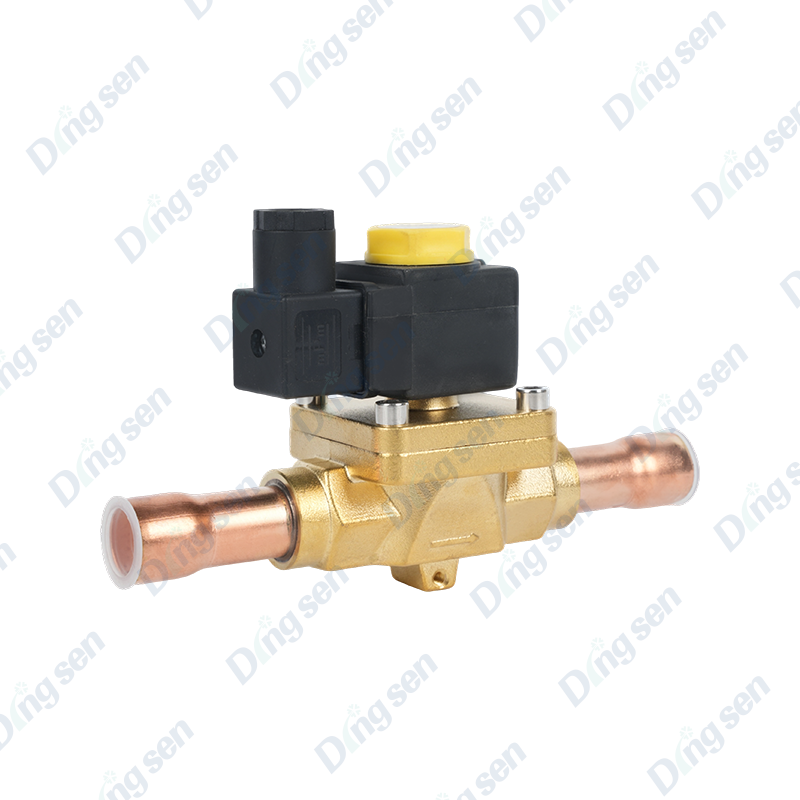
EVR solenoid valves are key components in refrigeration and air conditioning, co...
-
The air conditioning three-way valve is a key component for switching and contro...
-
Diaphragm-type hand valves are manual flow control components for refrigeration ...
-
The air conditioning three-way valve is a key component for switching and contro...

Contact Us
-

No. 109 Jiefang Road, Diankou Town, Zhuji City, Shaoxing, Zhejiang Province
-

+86-13867581196
-

Copyright © shaoxing DingSen Refrigeration Technology Co Ltd. All Rights Reserved
OEM Refrigeration Parts Manufacturer Custom Automotive AC Parts Factory