
 en
en  Español
 عربى
عربى
Auto Air Conditioner Service Tools: A Complete Guide for Shops and Technicians
You are standing next to a car that won't cool. You connect your manifold set, but the low-side coupler backs off, the hose twists, and the gauge reads several pounds off. That moment is not about the refrigerant; it is about the tools between your hand and the system. Auto air conditioner service tools either make the diagnostic and charging steps predictable or they turn them into guesswork. This guide explains the tool groups, the service sequence, and the selection criteria that matter for a professional shop.
Content
What Makes a Service Tool Trustworthy?
An AC service tool earns trust through three things: stable connection, accurate reading, and clean refrigerant handling. A coupler that fits different port sizes without cross-threading prevents refrigerant loss and protects the technician's gloves. Gauges with clear graduations and low needle flutter allow you to trust the numbers. Hose materials that resist permeation keep moisture and air out of the loop. When any one of these links fails, the repair sequence slows down and the chance of a comeback increases.
| Tool group | Typical failure | Consequence |
|---|---|---|
| Couplers | Loose fit | Refrigerant loss and inaccurate low-side reading |
| Hoses | Permeation and cracked outer cover | Moisture enters the system and pressure readings drift |
| Manifold gauge | Sticky needle or poor calibration | Wrong charge decision and repeated recovery |
| Leak detector | Low sensitivity | Missed small leaks lead to customer comebacks |
The horizontal bars show how a standard service visit is usually divided between five tasks. Evacuation occupies the largest block because pulling moisture and air out of the system requires dwell time. Leak checking is close behind, since a good leak check is only as fast as the detector and the couplers you use. Recovery and charging are shorter, but they become longer when hose fittings do not seal cleanly. That is why tool upgrades often target evacuation and leak detection first. Cutting ten minutes from each of these steps can add one more job to a technician's afternoon.
The Core Tool Groups in an Auto AC Service Station
A professional AC service station is not defined by one expensive machine. It is a chain of tools from the gauge to the refrigerant bottle. Each link must be compatible with the others and strong enough for daily use.
Manifold Gauge and Pressure Readout
The manifold gauge set is the heart of diagnosis. It lets you see static pressure, low-side pressure, and high-side pressure before and during operation. On common HFC refrigerants, the gauge set must have the right service port connectors and a pressure range that covers both low and high sides. A good set also uses color-coded hoses and valve knobs that turn smoothly. Without accurate pressure data, evacuation and charging decisions become guesses.
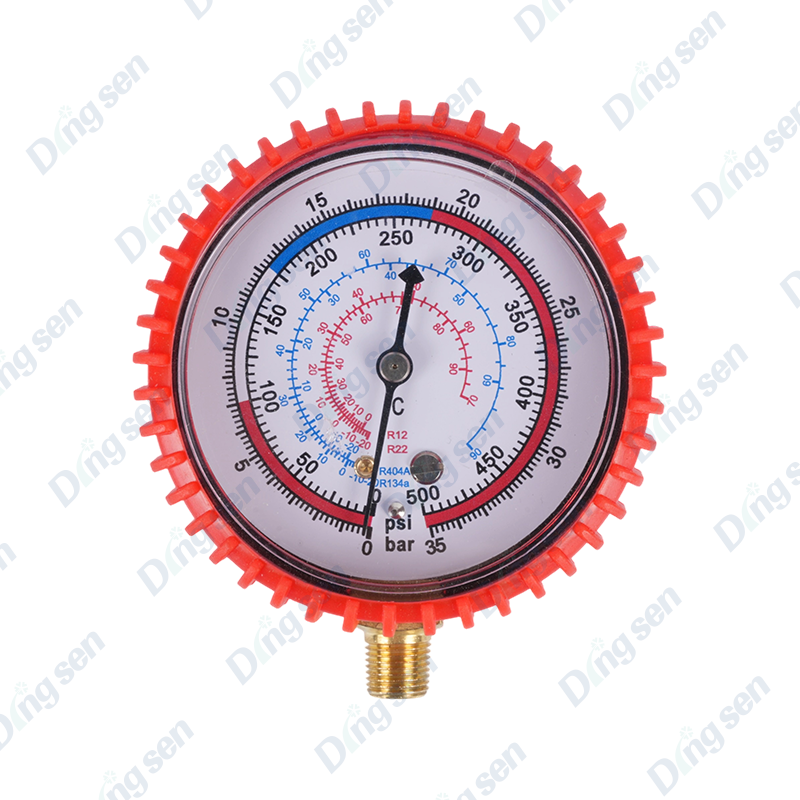 Air Conditioner Refrigerant Charging Pressure Gauge with High and Low Side ReadingsThis precision gauge displays real-time high and low pressures and includes temperature-pressure scales for R22, R410A, and R32. It helps technicians charge accurately and supports residential and commercial AC maintenance.View Product →
Leak Detection
Leak detection is the first troubleshooting step on many AC systems. A small refrigerant leak can cause poor cooling, longer compressor cycles, and eventually compressor damage. Electronic detectors respond quickly to slight concentrations of refrigerant, while dye and soap bubble methods require closer contact. For shop use, a detector with adjustable sensitivity helps you narrow the leak location without chasing false positives. It works best when paired with test hoses that do not introduce extra refrigerant into the area.
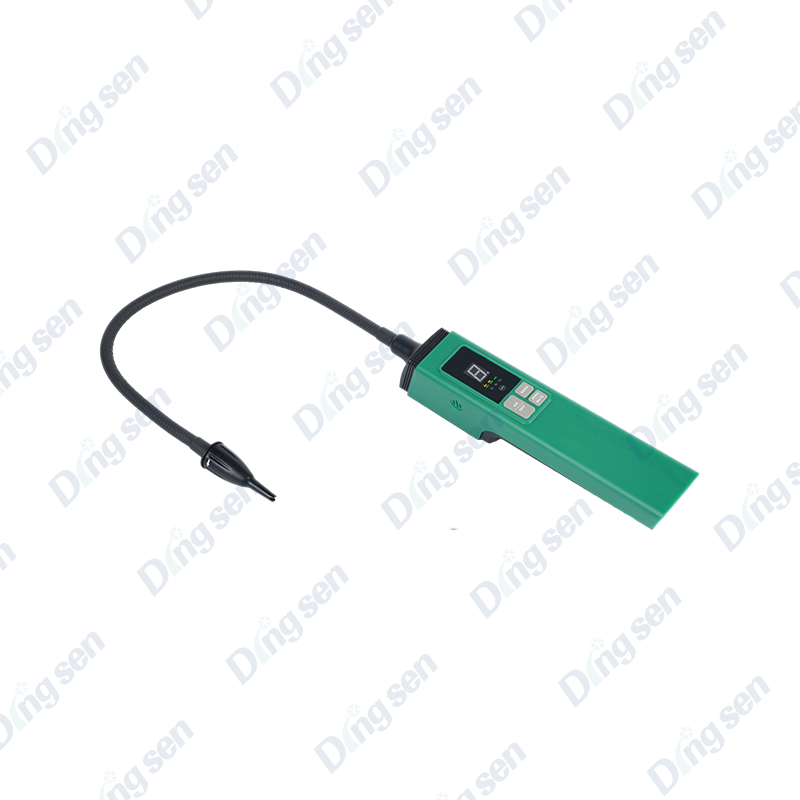 Refrigerant Leak Detector with High Sensitivity Sensors for AC SystemsAn electronic sniffer with fast response and anti-interference circuitry, suitable for locating leaks in air conditioners, refrigerators, and automotive systems. Its adjustable sensitivity aids precise pinpointing during troubleshooting.View Product →
Comparing leak detection methods by sensitivity shows why professional shops often carry more than one method. An electronic sniffer scores highest because it can trace a tiny concentration without close contact. A nitrogen pressure test is strong when the system has been opened and needs a structural check. Fluorescent dye works well for slow leaks, but requires running the system and inspecting with a UV light. Soap bubbles are simple and cheap, yet they miss small leaks in tight spaces. The practical conclusion is that your choice of detection tool should match the leak size and the amount of time you have.
Hoses, Couplers and Adapters
Hoses carry refrigerant and also carry risk. Standard service hoses must have barrier layers that resist permeation, because even microscopic leaks can pull moisture into the system. Couplers should snap onto Schrader ports with a positive stop, and adapters allow you to switch between port sizes without metal-to-metal wear. Many comebacks trace back to an O-ring or a worn coupler. Replacing O-rings regularly and using dedicated couplers for each refrigerant type prevents cross-contamination.
Evacuation and Charging System
A powerful vacuum pump and a charging system are useless if the connections leak. The evacuation process needs to reach and hold a vacuum; the charging process needs to deliver a precise weight of refrigerant. A filling system with a liquid viewing chamber or scale feedback gives you confidence that the charge is correct. Combined with the right pressure gauge and hoses, it turns a messy operation into a controlled one.
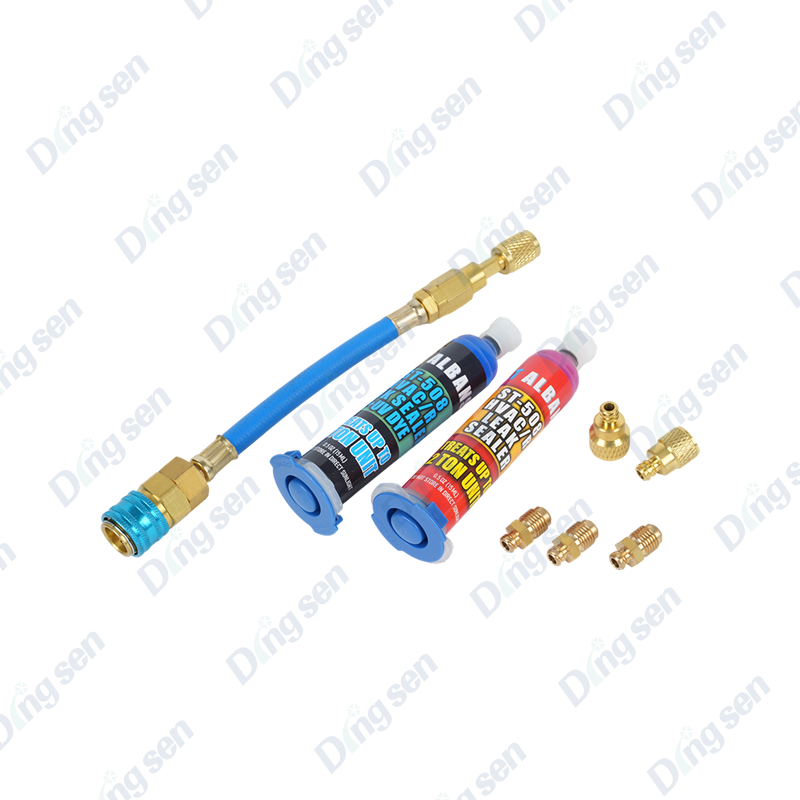 Integrated Automotive AC Sealant and Refrigerant Filling SystemThis all-in-one kit combines sealant, refrigerant, cleaner, hoses, and quick connectors to repair leaks and recharge without disassembly. It fits over 90% of vehicles and is CFC-free, supporting efficient and eco-friendly AC service.View Product →
The Standard Service Sequence, Step by Step
Every reliable AC service follows the same skeleton: inspect, recover, evacuate, charge, verify. Each step has a clear finish condition. Understanding these conditions helps you choose the right tool and know when a tool is not working properly.
- Perform a visual inspection of the compressor, condenser, hoses, and service ports.
- Measure static pressure and compare it with ambient temperature before deciding to leak test.
- Recover the refrigerant into an approved recovery cylinder and record the amount.
- Evacuate the system to the vacuum level specified by the vehicle or equipment maker.
- Charge the system by mass using a filling system and confirm the compressor engages.
- Verify cooling performance by checking vent temperature and high and low side pressures.
The line chart shows how the gauge reading moves during a typical service cycle. The pressure starts high after recovery and falls as refrigerant is pulled out. It then crosses zero and goes into vacuum during the evacuation stage. Holding the vacuum line flat tells the technician that the system is sealed. When the charging valve opens, the pressure rises quickly to the target level. If any part of that curve moves in the wrong direction, the tool set is the first place to look.
What to Look For When You Buy Service Tools
Before you buy, decide which service steps you will perform in-house and which tools you will connect together. A random collection of cheap gauges, hoses, and detectors can create more problems than it solves. The radar chart below compares the overall character of a professional set and a basic DIY kit.
The radar chart compares a professional shop set and a basic DIY kit across five qualities. A professional set scores full marks on accuracy, durability, coupling fit, and safety, but slightly lower on speed because heavier hoses need careful handling. The basic kit remains even at level three, which is acceptable for occasional use but not for daily shop work. The shape of the polygon shows that the two sets are not just different in price, but different in balance. A professional set keeps a wide area, meaning no single weak link dominates the workflow. For a technician who fixes cars every day, that even spread is what prevents comebacks.
Selection Checklist
- Verify the pressure range and connection size match the refrigerants you handle.
- Choose hoses with low-permeation barrier tubes and replace them when the outer layer cracks.
- Make sure couplers and adapters are made for the service ports on the vehicles you see most.
- Check that the evacuation work is supported by a vacuum gauge, not just a timer.
- Buy from a supplier that can provide matching valves, gauges, filling tools, and fittings.
Why a Manufacturing Supplier Makes a Difference
Even a well-chosen tool set needs to be supported by exact manufacturing tolerances. Dingsen has manufactured refrigeration and automotive AC parts since 2008, and a large part of its product line is designed around the service loop: pressure gauges, leak detectors, filling systems, hoses, valves, and copper fittings. Their in-house testing lab helps ensure that threads match, O-rings seal, and valve stems move smoothly. If you operate a workshop, buying service tools from the same supplier as your replacement parts simplifies inventory and reduces mismatched components. You can review the full range of auto AC service tools and build a kit that follows the same logic as your repair process.
Start with the task, not the catalog. Identify which step of the AC service loop causes the most delays in your shop, then check that the gauge, hoses, detector, and charging system all work as one. The tools do not need to be the most expensive; they need to be predictable. Replacing worn O-rings, upgrading a coupler, and using a proper filling system often improves service quality more than buying another electronic device. If you want to compare your existing setup with what a dedicated supplier can provide, contact our team and let us match the right components.
-

Air conditioning pipe bandage strip is used to secure and protect the pipes conn...
-

Air conditioning plastic nuts are lightweight seals for connecting copper pipes ...
-
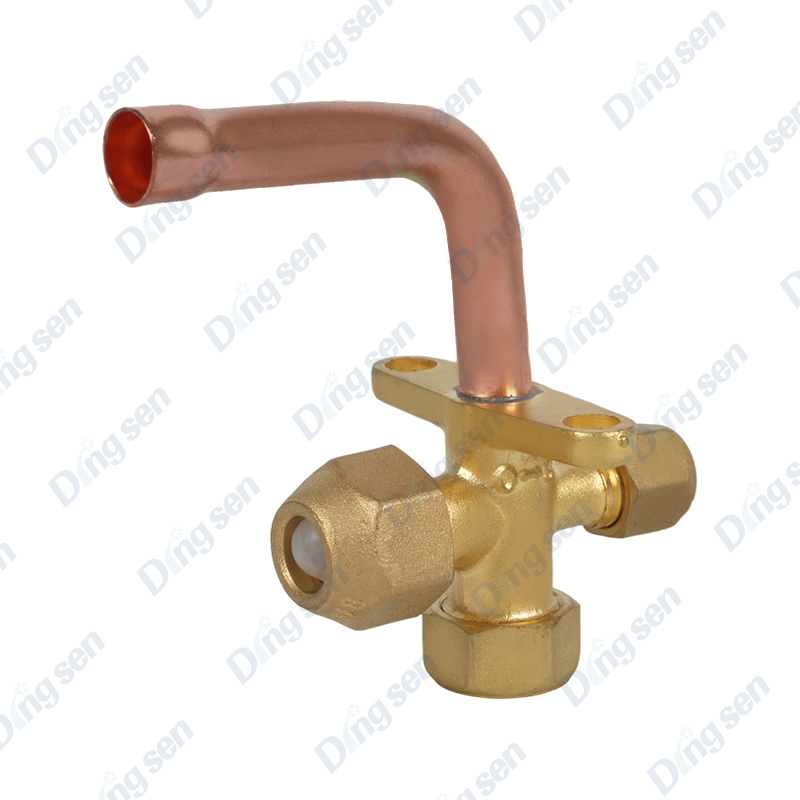
The air conditioning three-way valve is a key component for switching and contro...
-
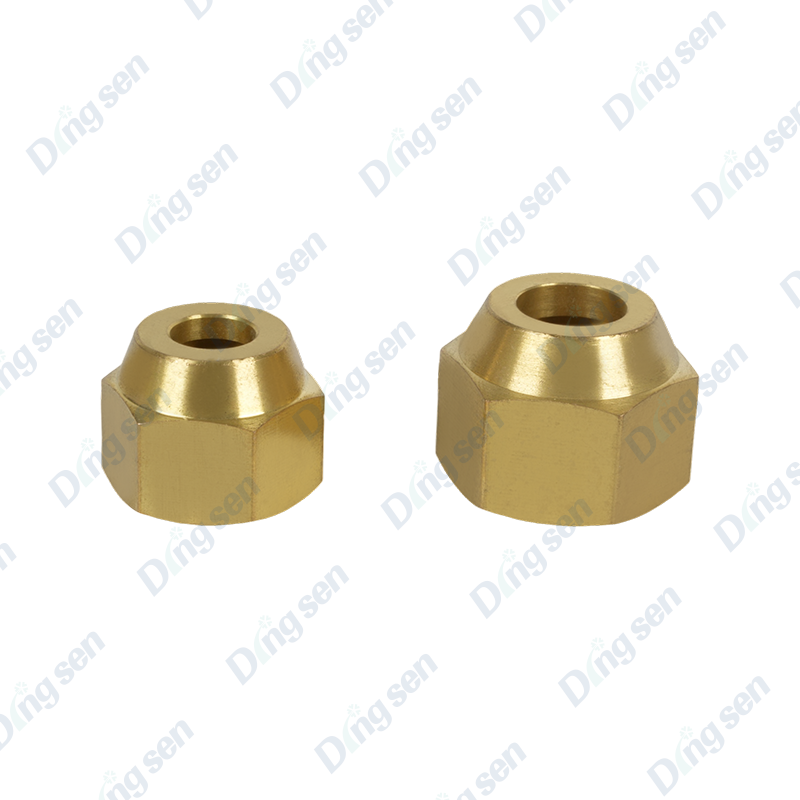
Air conditioning reducing nuts are sealed connectors for connecting copper pipes...
-
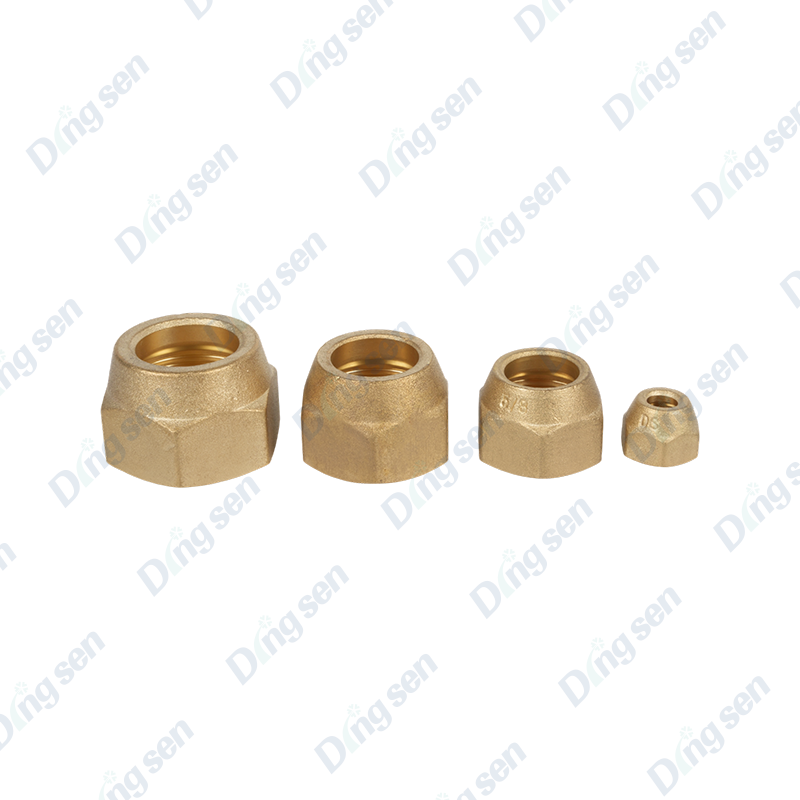
Air conditioning nuts are core fasteners for connecting copper pipes in air cond...
-
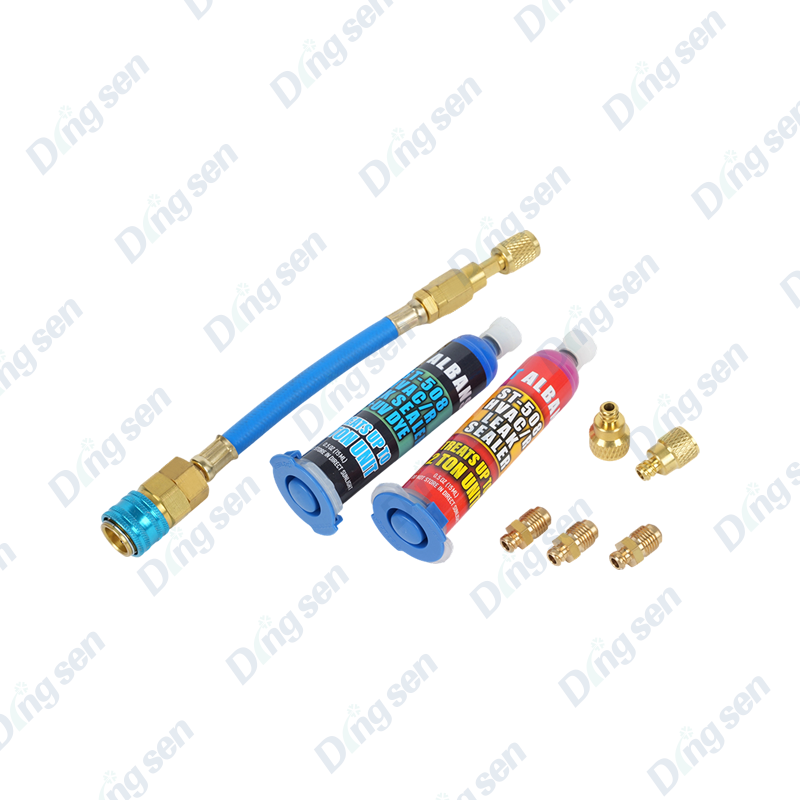
The automotive air conditioning sealant filling system is a one-stop repair tool...

Contact Us
-

No. 109 Jiefang Road, Diankou Town, Zhuji City, Shaoxing, Zhejiang Province
-

+86-13867581196
-

Copyright © shaoxing DingSen Refrigeration Technology Co Ltd. All Rights Reserved
OEM Refrigeration Parts Manufacturer Custom Automotive AC Parts Factory