
 en
en  Español
 عربى
عربى
How Does a Solenoid Valve Work? Coil, Plunger, Orifice, and Troubleshooting Explained
Most solenoid valve callbacks start with a symptom rather than a theory. A walk in cooler runs all night and never reaches its set point. A heat pump reverses at the wrong moment. An ice machine floods the evaporator after shutdown. A technician then pulls the coil off, presses the plunger with a screwdriver, and finds that the valve still moves freely by hand. When that happens, the fault is electrical or system side, not mechanical. Knowing what the coil, the plunger and the orifice are each supposed to do, and in what order, turns a long diagnostic call into a short one.
Content
- 1 How a Solenoid Valve Works: The Short Answer
- 2 Inside the Valve: Three Assemblies That Do the Work
- 3 The Working Sequence, Step by Step
- 4 Why the Coil Gets Warm: Inrush, Holding Current and Duty Cycle
- 5 Normally Closed, Normally Open and Multi Way Designs
- 6 What Determines Whether the Valve Works in Your Circuit
- 7 Matching the Valve to the Job in Refrigeration Work
- 8 Failure Modes You Can Find in Minutes
- 9 Before You Order: A Practical Checklist
How a Solenoid Valve Works: The Short Answer
A solenoid valve is an electrically operated shutoff device. Current passes through a copper winding, the winding produces a magnetic field, and that field pulls a movable iron plunger against a return spring. The plunger carries a seal that either lifts away from a small opening called the orifice to allow flow, or presses down onto it to stop flow. Cut the current and the spring returns the seal to its rest position. Every other part of the valve exists to support that single movement: guiding the plunger, sealing the fluid path and routing the flow through the correct ports.
Inside the Valve: Three Assemblies That Do the Work
A solenoid valve looks like a body with a small cylinder bolted on top, but it behaves like three separate assemblies stacked together. Each one fails in its own way, and the symptom usually points to the guilty assembly.
| Assembly | What it does | Typical symptom when it fails |
|---|---|---|
| Coil and electrical connection | Converts current into a magnetic field and provides the force that moves the plunger | No click when energised, coil abnormally hot or cold with power applied, intermittent operation |
| Plunger, guide tube and return spring | Converts magnetic force into straight line movement along a fixed axis | Valve hums but does not shift, delayed opening, sticking after long idle periods |
| Seal, disc and orifice | Forms the actual flow barrier and sets the flow rate for a given pressure drop | Leakage past a closed valve, slow pressure rise, nicked seat after debris passes |
| Body, ports and flow path | Directs fluid from inlet to outlet in the designed direction | Reversed installation, flow far lower than the catalogue figure |
The Working Sequence, Step by Step
- At rest, the return spring holds the seal against the orifice. In a normally closed valve this means no flow, even with full line pressure sitting on the inlet port. This is the safe state for most refrigeration and fuel applications.
- The controller applies voltage to the coil terminals, usually through a relay, a thermostat or a defrost board.
- Current through the winding builds a magnetic field inside the guide tube within tens of milliseconds.
- The magnetic force on the plunger rises until it exceeds the spring force plus the fluid pressure holding the seal closed, and the plunger lifts.
- The seal moves off the orifice. Fluid or gas now passes from the inlet port to the outlet port, and the flow rate is set by the orifice diameter and the pressure difference across the valve.
- When power is removed, the field collapses, the spring pushes the plunger back down, and the seal closes the orifice again.
Why the Coil Gets Warm: Inrush, Holding Current and Duty Cycle
With the plunger still seated, the magnetic circuit has a large air gap, so it needs a strong field to pull the plunger in. That is the inrush phase, and it draws several times the rated current for a fraction of a second. Once the plunger is pulled in, the air gap closes and the same holding force can be maintained with much less current. A coil rated at 10 watts may draw the equivalent of 40 volt amperes at the instant of energising. This explains a fault that confuses many technicians: a coil can measure correct resistance and still overheat, because a plunger that never fully seats keeps the valve stuck in the inrush condition and cooks the winding. It also explains duty cycle ratings. A valve that must stay open for hours needs a coil designed for continuous duty, while some short pulse designs are rated for intermittent use only.
Normally Closed, Normally Open and Multi Way Designs
Normally closed
Flow is blocked with no power applied. This is the common choice for liquid line duty, because a power failure stops the flow rather than flooding the low side of the system.
Normally open
Flow passes with no power applied and stops when the coil is energised. These valves are used where cooling water or a vent line must remain open when the control circuit is dead.
Two way and three way
A two way valve has an inlet and an outlet and simply opens or closes one path. A three way valve has three ports and can divert flow from one port to another, which suits cylinder control, sample switching and some hot gas bypass arrangements. The port configuration matters as much as the coil voltage, because a three way valve installed as a two way valve will leak in one position no matter how well it is wired.
What Determines Whether the Valve Works in Your Circuit
- Orifice size and flow coefficient: one body size is usually offered with several orifice diameters, and flow rises steeply with diameter.
- Minimum pressure differential: pilot operated valves need a pressure difference across the valve to open. Below that figure they stay shut even with the coil energised.
- Maximum pressure differential: above it the valve may not open reliably or may not close against the flow.
- Flow direction: most designs seal against flow, so a reversed installation leaks past the seat when closed.
- Seal material: refrigerant, oil and glycol mixtures each call for a different elastomer, and a swollen seal drags on the guide tube.
- Coil voltage, frequency and duty cycle: a 24 V DC coil, a 110 V AC coil and a 220 V AC coil are not interchangeable, and the AC versions depend on the supply frequency.
Matching the Valve to the Job in Refrigeration Work
In refrigeration the solenoid valve is usually a liquid line solenoid. On a pump down cycle the thermostat opens the valve on a rise in temperature, the compressor pulls the low side down to the pump down setting, and a low pressure switch stops the compressor. If the valve leaks past its seat, the low side never stays down, the compressor short cycles, and the machine runs all night on the low pressure control.
Direct acting valves suit small systems where the available pressure difference is small, while pilot operated valves handle larger line sizes where a direct acting coil would be too large and too warm. Refrigerant choice matters here as well: a design that performs well on R134a may need a different orifice and seal compound on R32 or on CO2 systems running at much higher pressures.
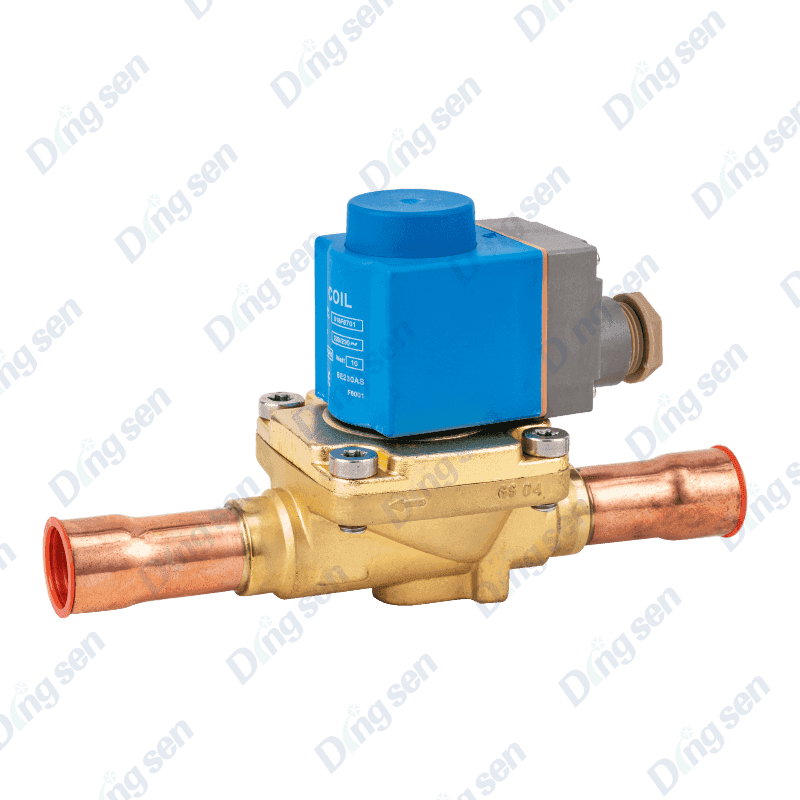 EVR Type Solenoid Valve for Refrigeration and Air Conditioning SystemsCompact split-design solenoid valve with brass body and blue coil, available direct-acting or servo-operated for liquid, suction, and hot gas lines.View Product →
Valve families are usually built around the same working principle and then scaled by port size, orifice and connection style, so a specification that fits one line size often has a direct equivalent one size up or down.
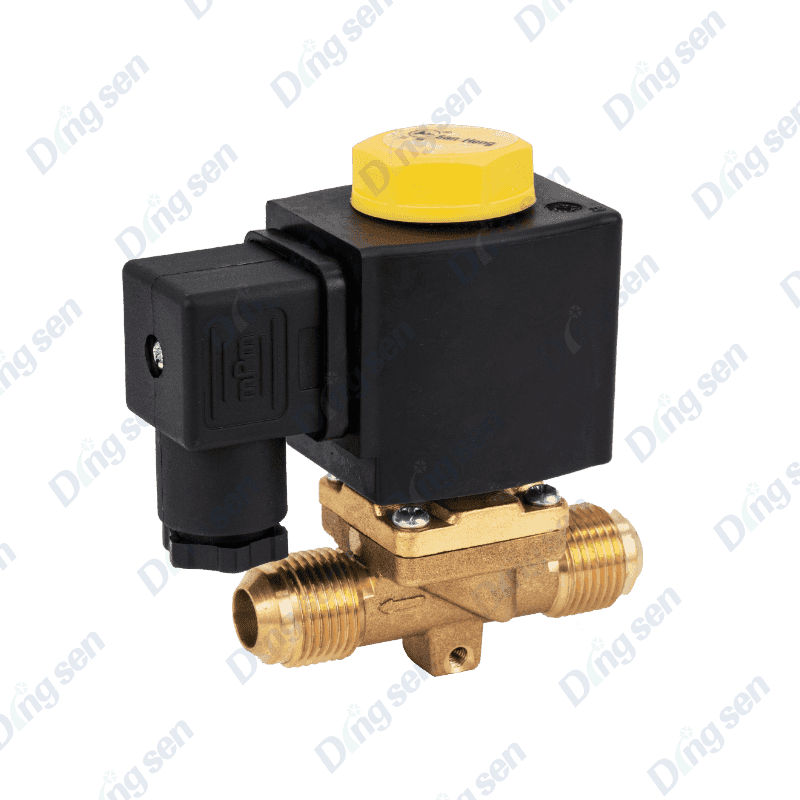 DSF Refrigeration Solenoid Valve for Air Conditioning and Cold StorageCompact brass-body solenoid valve with black coil, designed for precise refrigerant flow control in air conditioning, cold storage, and commercial refrigeration circuits.View Product →
For anyone who wants a closer look at one common family used on liquid line duty, there is a short technical note on EVR type solenoid valves that covers construction and long term operation.
Failure Modes You Can Find in Minutes
- Coil failure: an open winding, a shorted turn or a burnt insulation layer. Measure resistance and compare it with the value stamped on the coil.
- Stuck plunger: corrosion, sludge or a swollen seal wedges the plunger in the guide tube, so the valve hums without shifting.
- Leaking seat: a chip of copper, brazing flux or scale passes through and nicks the seal, leaving a permanent leak path.
- Ice in the orifice: moisture in the circuit freezes at the restriction and blocks flow until the valve warms up again.
- Wrong coil for the supply: an AC coil on a DC supply or the reverse will energise once and fail soon after.
Before You Order: A Practical Checklist
- Record the line size, connection type and the direction of flow shown on the old body.
- Note the fluid, the normal working temperature and the ambient temperature around the coil.
- Confirm the coil voltage, AC or DC, and the supply frequency for AC coils.
- Decide whether the circuit needs a normally closed or normally open function.
- Check the minimum and maximum pressure differentials the system can deliver.
- Check the duty cycle, because a valve that holds open for hours needs a continuous duty coil.
Bring those six numbers to a supplier and the selection becomes a short conversation instead of a guessing game. Larger catalogues cover the same ground in more detail, and a full product brochure is usually the fastest way to compare capacities across a range.
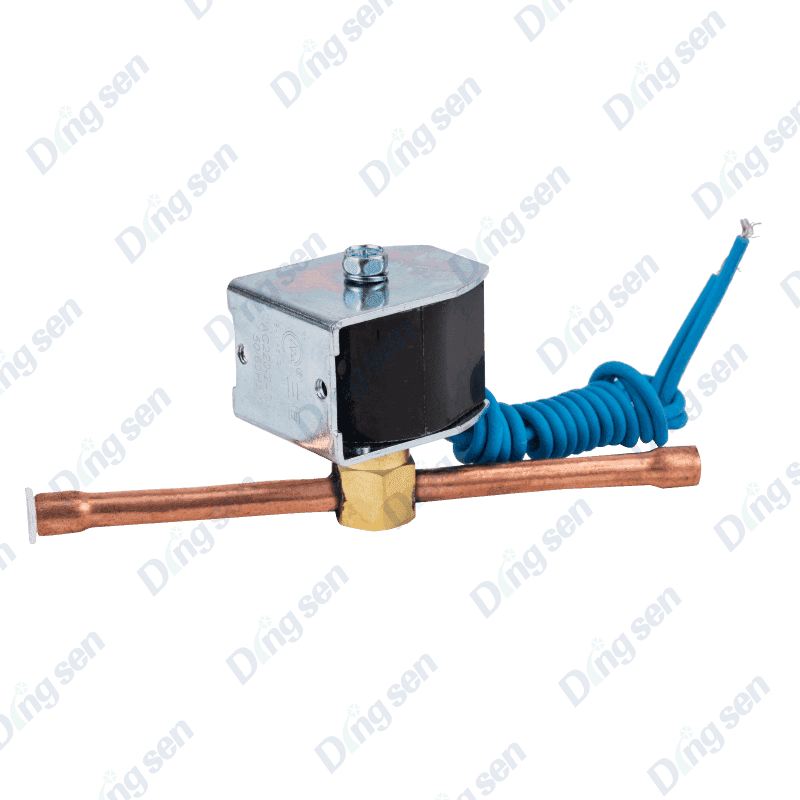 FDF Type Solenoid Valve for Refrigeration, Air Conditioning, and Heat PumpsPilot-operated solenoid valve with integrated coil and valve body, used in cold storage, air conditioning, dehumidifiers, and defrosters.View Product →
A solenoid valve is a simple machine with a narrow set of moving parts, and that is exactly why it is diagnosable. The coil turns current into motion, the plunger turns motion into a change of state, and the seal decides whether the flow stops. When a system misbehaves, testing those three links in order takes minutes and tells you whether the problem is at the valve, at the controller or somewhere further down the line.
-
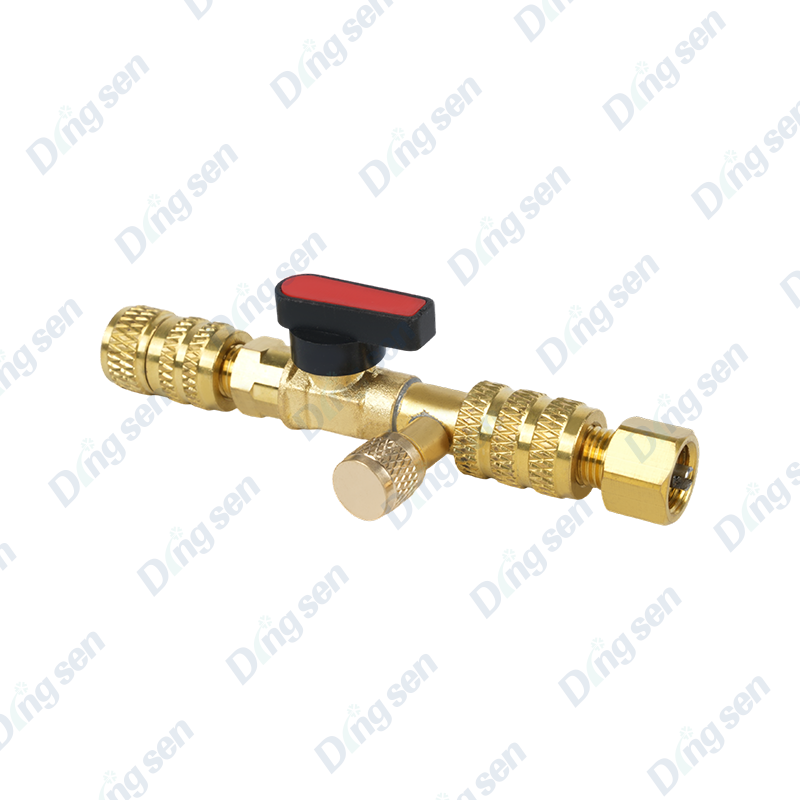
Valve core installation and removal tools are specialized tools for installing a...
-
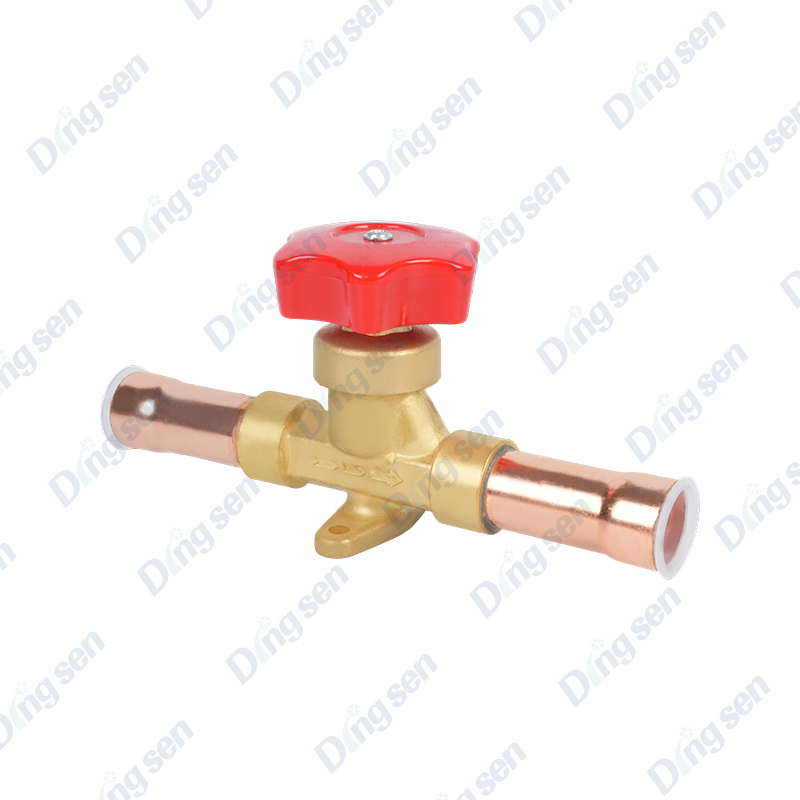
Diaphragm-type hand valves are manual flow control components for refrigeration ...
-
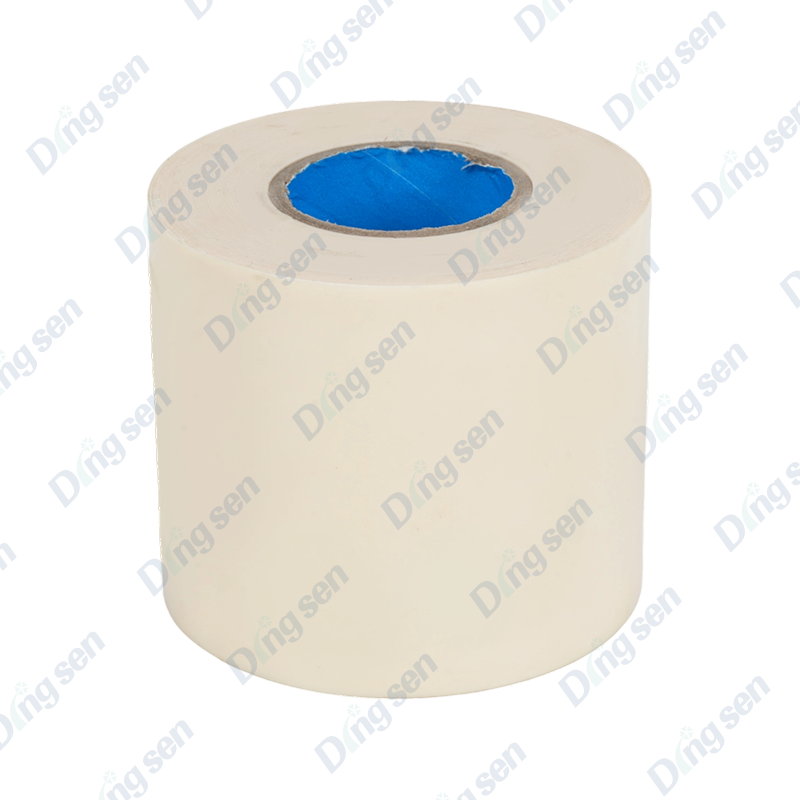
Air conditioning pipe bandage strip is used to secure and protect the pipes conn...
-
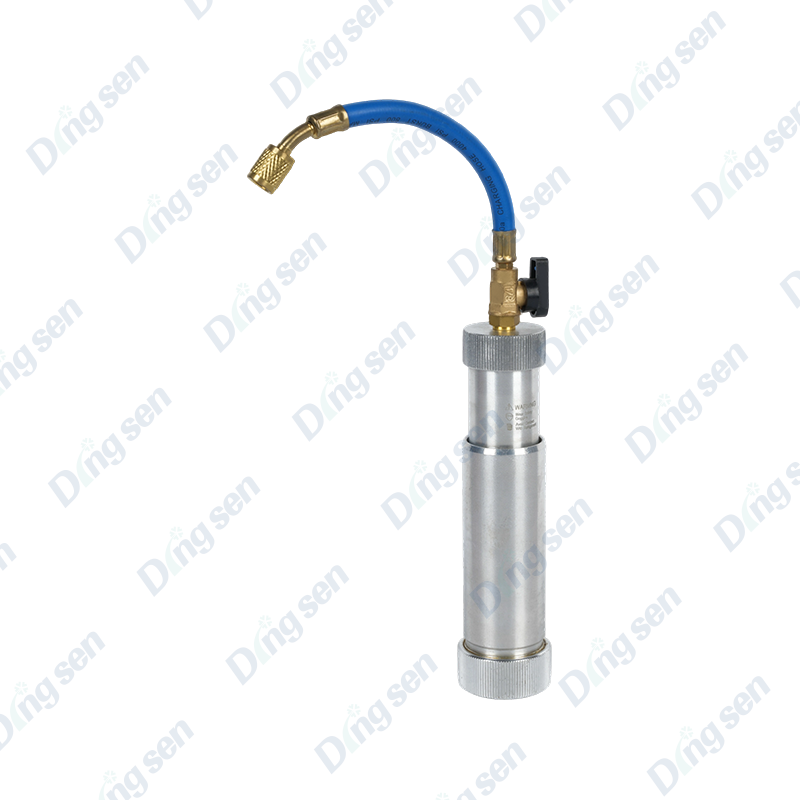
Refrigerant and refrigeration oil filler is a special device for replenishing me...
-
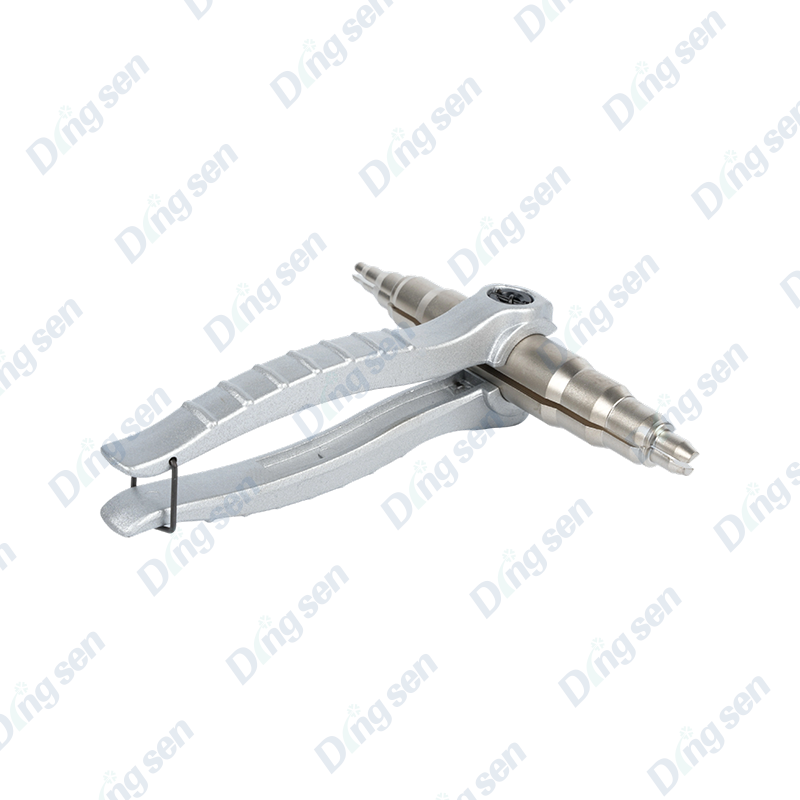
The copper tube expander is a specialized tool for copper tube connection. It ex...
-
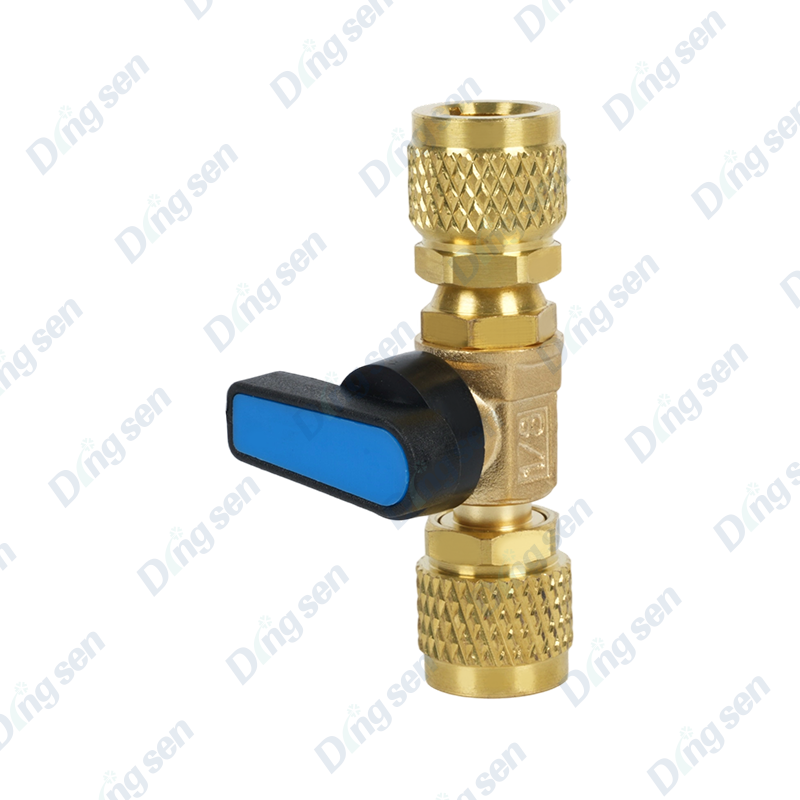
Air conditioning refrigerant ball valve are core components for fluid control in...

Contact Us
-

No. 109 Jiefang Road, Diankou Town, Zhuji City, Shaoxing, Zhejiang Province
-

+86-13867581196
-

Copyright © shaoxing DingSen Refrigeration Technology Co Ltd. All Rights Reserved
OEM Refrigeration Parts Manufacturer Custom Automotive AC Parts Factory