
 en
en  Español
 عربى
عربى
How Does a PID Controller Work? Proportional, Integral and Derivative Explained
If a cold room drifts 2 K above its setpoint, then 3 K below it, and repeats that cycle every few minutes, the controller gets blamed before the sensor, the valve, or the door traffic does. Most of the time the hardware is fine and the loop settings are not.
The short answer to how a PID controller works: it measures a process variable, compares it with a setpoint, and drives an actuator with a correction built from three terms. The proportional term answers the error that exists right now. The integral term answers the error that has accumulated over time. The derivative term answers how quickly the error is changing. Added together, they produce the output that opens a valve, changes a fan speed, or trims compressor capacity.
Content
The Core Idea: Measure, Compare, Correct
Every PID loop has four parts: a sensor reporting the process variable, a controller holding the setpoint and doing the math, an actuator that can change the process, and the process itself. The sensor feeds the controller, the controller moves the actuator, and the actuator changes what the sensor reads. That circle is the closed loop.
The controller repeats one calculation at a fixed interval, the sample time. It subtracts the measured value from the setpoint and calls the difference the error. In a cooling application, a measured value above the setpoint gives a positive error and more cooling. Configure the loop the wrong way and it becomes reverse acting when it should be direct acting; it will run away instead of settling, and no amount of tuning will fix it.
The output matches whatever the actuator expects: 0 to 10 V for a modulating valve, 4 to 20 mA for a positioner, a relay contact for a compressor, or pulse width modulation for a heater. A relay output turns the PID calculation into a threshold decision, so loop resolution depends on how often the contact is allowed to switch.
What the Three Terms Actually Do
Each term has a job, and each can be switched off by setting its gain to zero. Many working loops run as PI controllers, because derivative action adds little to a slow temperature process.
Proportional Term
The proportional term multiplies the current error by a gain. With a gain of 2 and an error of 3 K, the output moves 6 units. More gain means faster correction, but past a point the loop oscillates, because the controller reacts to a measurement the process has not finished answering. A proportional-only controller rarely lands exactly on setpoint. It settles where the remaining error is just large enough to hold the output the process needs, and that leftover is steady-state offset.
Integral Term
The integral term accumulates error over time and keeps adding correction while the error persists, usually expressed in repeats per minute or seconds per repeat. It removes offset, which is why a PI loop can hold a chilled water temperature exactly where you want it. The price is lag: integral action is based on history, so it keeps pushing after the error has gone and produces a slow oscillation that takes far longer to appear than proportional oscillation. It also winds up. If the valve is already fully open, the term keeps accumulating correction it cannot deliver, and the loop overshoots badly when the error finally reverses.
Derivative Term
The derivative term responds to the rate of change of the error and opposes motion, which damps the loop and allows a higher proportional gain. It also amplifies sensor noise, because a small noisy reading across a short sample time looks like a huge rate of change. In practice derivative action is filtered, calculated on the measurement rather than the error, or simply left at zero.
| Term | Reacts to | Main benefit | If set too high |
|---|---|---|---|
| Proportional | Current error | Fast correction and tight initial response | Rapid oscillation, valve hunting |
| Integral | Accumulated error | Removes steady-state offset | Slow oscillation, overshoot after saturation |
| Derivative | Rate of change of error | Damping, allows higher proportional gain | Amplified noise, jerky actuator movement |
A Refrigeration Example: Superheat Control
Take an electronic expansion valve on a chiller. The controlled variable is superheat at the evaporator outlet, the setpoint might be 5 K, and the actuator is the valve motor or a proportional solenoid. When superheat rises above setpoint, the valve opens to admit more refrigerant. The proportional term opens it in proportion to the error, the integral term keeps nudging it open until superheat settles, and the derivative term, where it is used, slows the opening as superheat starts to fall so the valve does not overshoot into liquid floodback.
The same structure appears across a refrigeration plant. Condensing pressure is often held by modulating condenser fan speed, which makes it a pressure loop. Compressor capacity can be trimmed by a loop that converts a suction pressure error into an inverter command. Room and product temperature loops have long dead time and usually run without derivative action.
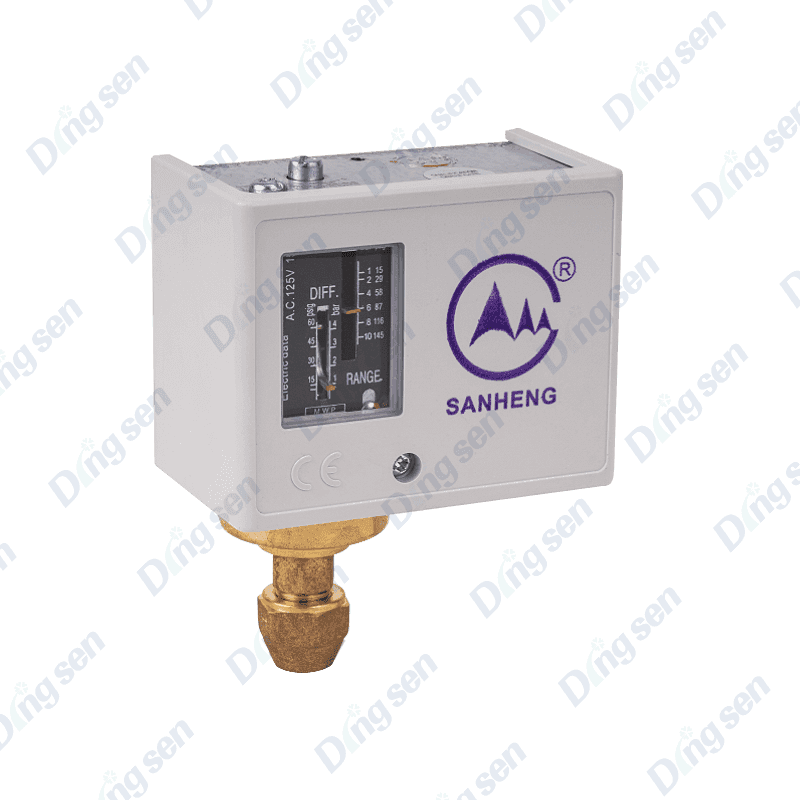 Refrigeration Pressure Controller with Mechanical Pointer DisplayProvides high and low pressure monitoring with automatic reset, helping protect compressors, fans, and drain valves in refrigeration systems.View Product →
Tuning Without Guesswork
The terms interact, so tuning follows a fixed order:
- Put the loop in manual and confirm the actuator travels its full range without sticking.
- Set integral and derivative to zero, then raise proportional gain until the measurement shows a small, continuous oscillation.
- Cut proportional gain to about half of that value.
- Add integral action slowly until offset disappears within an acceptable time.
- Add derivative only if overshoot remains and the signal is clean.
Dead time decides how hard a loop can be pushed. If the process needs 60 seconds to respond to a valve movement and its time constant is 300 seconds, a ratio of 0.2, classical rules such as Ziegler-Nichols or lambda tuning produce workable gains. If dead time is comparable to the time constant, for example a sensor mounted far downstream of the valve, nothing will make the loop fast, and the real fix is to move the sensor or add feedforward.
| Symptom | Usual cause | First adjustment |
|---|---|---|
| Fast, continuous oscillation | Proportional gain too high | Reduce proportional gain |
| Slow oscillation over minutes | Integral action too strong | Increase seconds per repeat |
| Offset that never closes | Integral disabled or output limited | Enable integral action, check output clamps |
| Jerky valve movement | Derivative on a noisy signal | Filter the input or set derivative to zero |
Practical Problems on the Plant Floor
Most commissioning problems fall into a handful of categories:
- Integral windup. The output saturates against a limit while error remains, and the loop overshoots when the error reverses. Anti-windup logic and output clamping solve it.
- Sensor noise. A filter whose time constant is close to the sample time can nearly double the dead time of the loop. Filter the input, not the output.
- Actuator deadband. A valve that needs a 3 percent output change before it moves sets a hard limit on how tight the loop can hold.
- Sample time. A loop scanned once per minute cannot control a process with a 30 second time constant.
- Non-linearity. A valve that is gentle near mid-travel and abrupt near the seat may need gain scheduling or a characterized output.
Where PID Meets Refrigeration and A/C Hardware
PID output only matters if the actuator can use it. Proportional solenoid valves, electronic expansion valves, variable frequency drives on condenser fans, and flow control three-way valves all accept a continuous signal and modulate. On and off devices such as standard solenoid valves, bulb type thermal expansion valves, and mechanical pressure switches are threshold devices, so a PID controller driving them is really generating a duty cycle.
That difference changes how components are judged. A valve that follows a modulating signal for years wears differently from one that switches a few times an hour, which is why the long-term operation of a modulating solenoid valve deserves attention before a loop is commissioned.
Suppliers such as Dingsen, manufacturing refrigeration and automotive air conditioning parts since 2008, build the pressure controllers, valves, and copper fittings that sit at the receiving end of those signals.
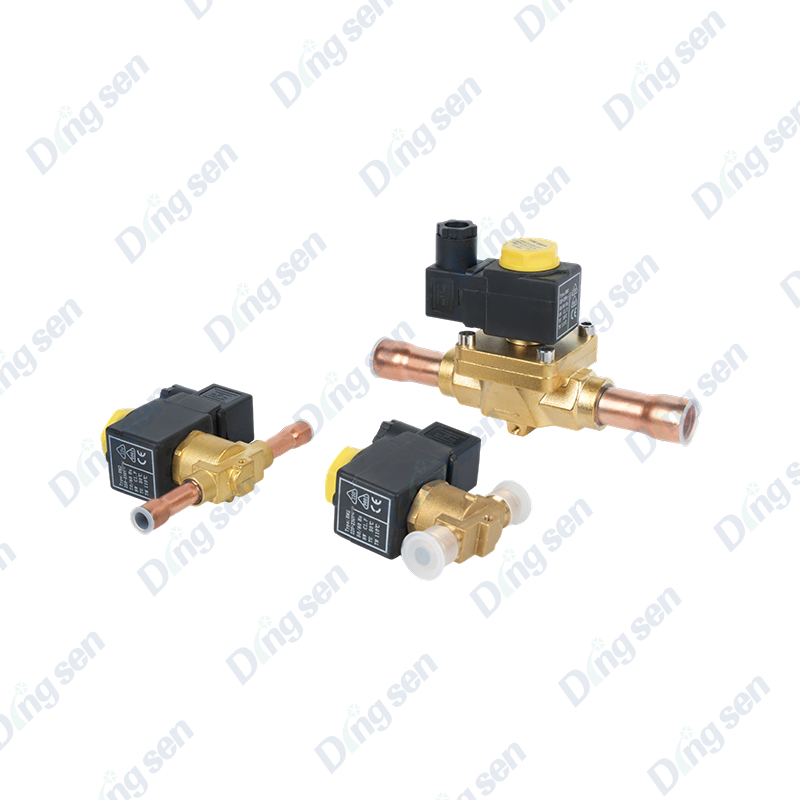 EVR Solenoid Valve for Refrigeration and Air ConditioningControls refrigerant flow in liquid, suction, and hot gas lines, with direct-acting and pilot-operated options for refrigeration systems.View Product →
 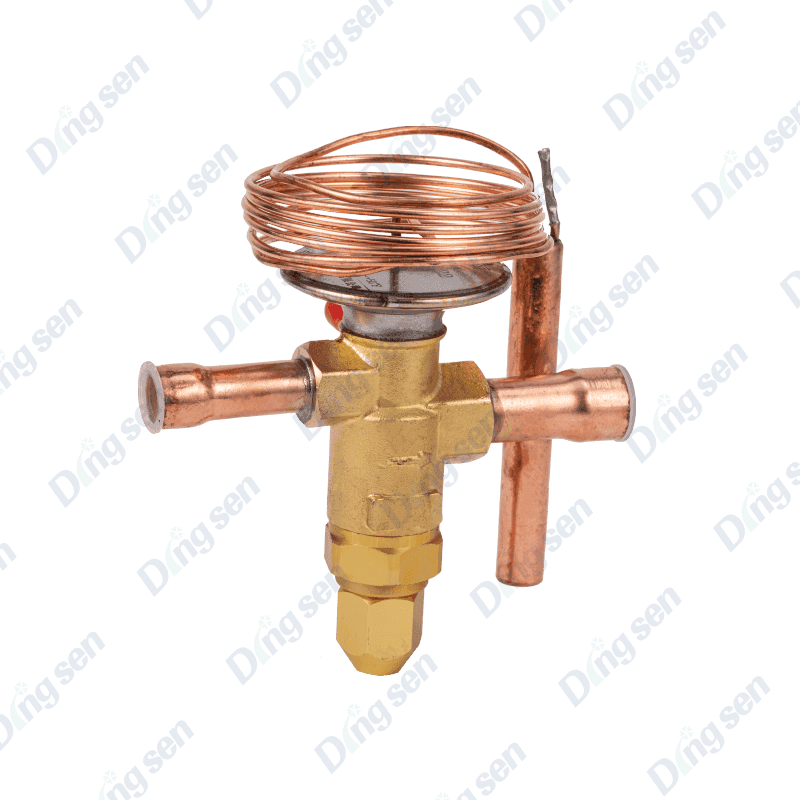 Thermal Expansion Valve with Adjustable Superheat ControlRegulates refrigerant flow to maintain superheat, featuring an H-type body and 0–8°C static superheat adjustment for cooling systems.View Product →
Specifying a Controller: What to Check
- Input type and range, matched to the actual sensor: NTC, PT100, 4 to 20 mA, or 0 to 10 V.
- Output type and resolution: relay, solid state relay drive, current, voltage, or PWM.
- Sample rate, fast enough for the process but not so fast that noise dominates the calculation.
- Auto-tune, anti-windup, and bumpless transfer between manual and automatic modes.
- Output limits and alarms, including high and low clamps for the integral term.
- Environment: panel or DIN rail mounting, IP rating, ambient temperature, vibration, and supply voltage tolerance.
A PID controller is three corrections added together and repeated on a clock: one against the current error, one against the accumulated error, and one against the speed of change. The physics of the process sets the ceiling on performance, and the settings decide how close the loop gets to it. Get the actuator direction right, measure dead time honestly, and keep the gains modest. That combination solves more loops than any aggressive tuning session.
-
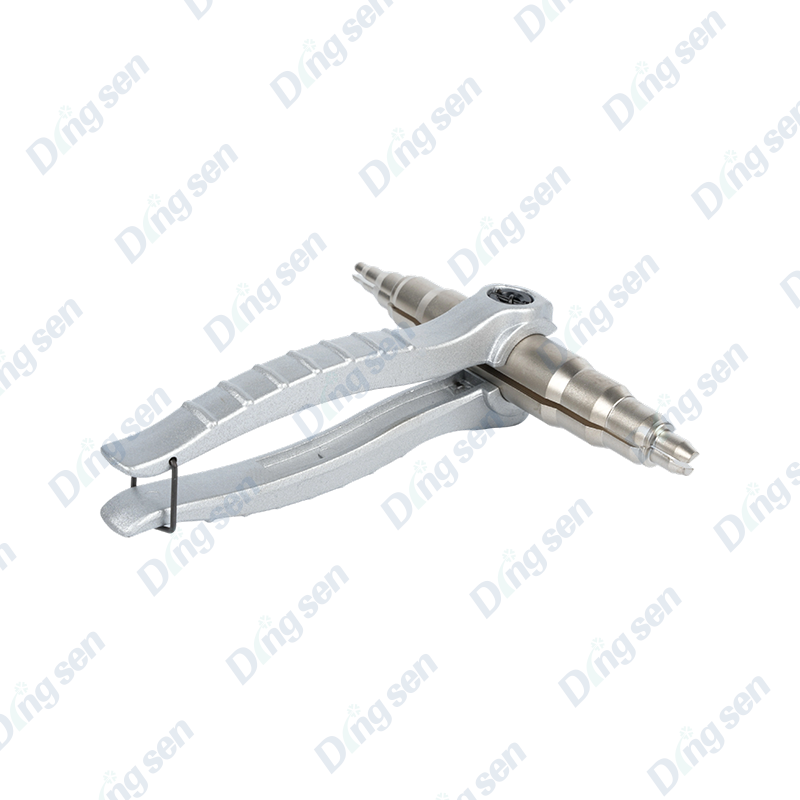
The copper tube expander is a specialized tool for copper tube connection. It ex...
-
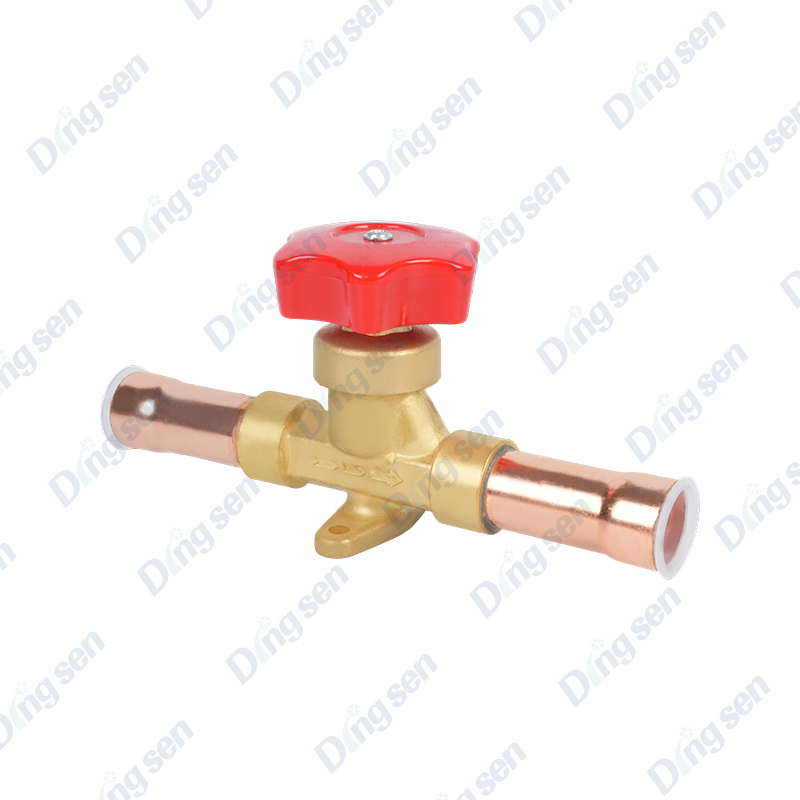
Diaphragm-type hand valves are manual flow control components for refrigeration ...
-
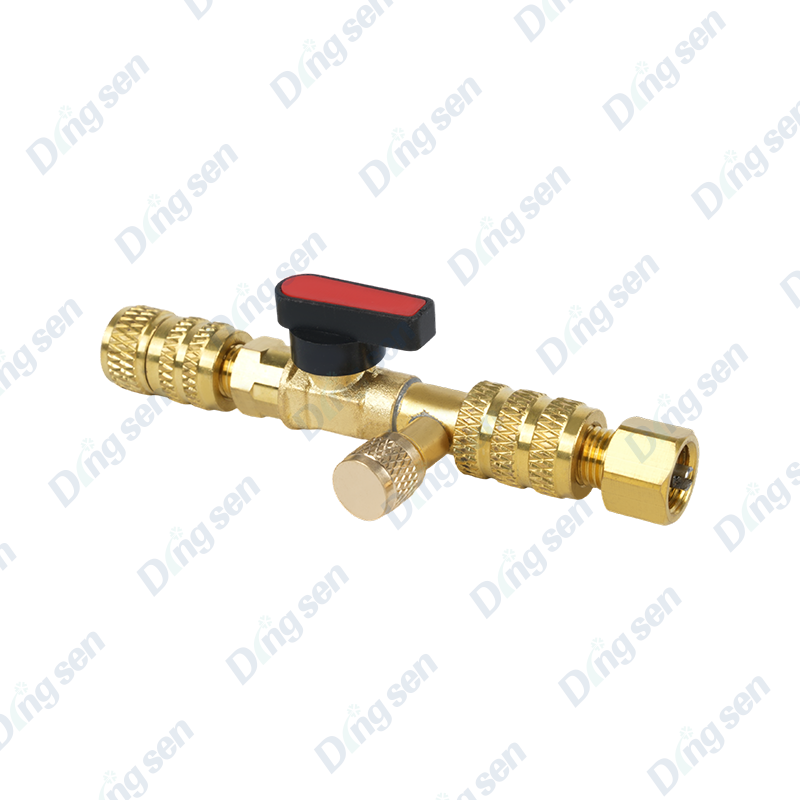
Valve core installation and removal tools are specialized tools for installing a...
-
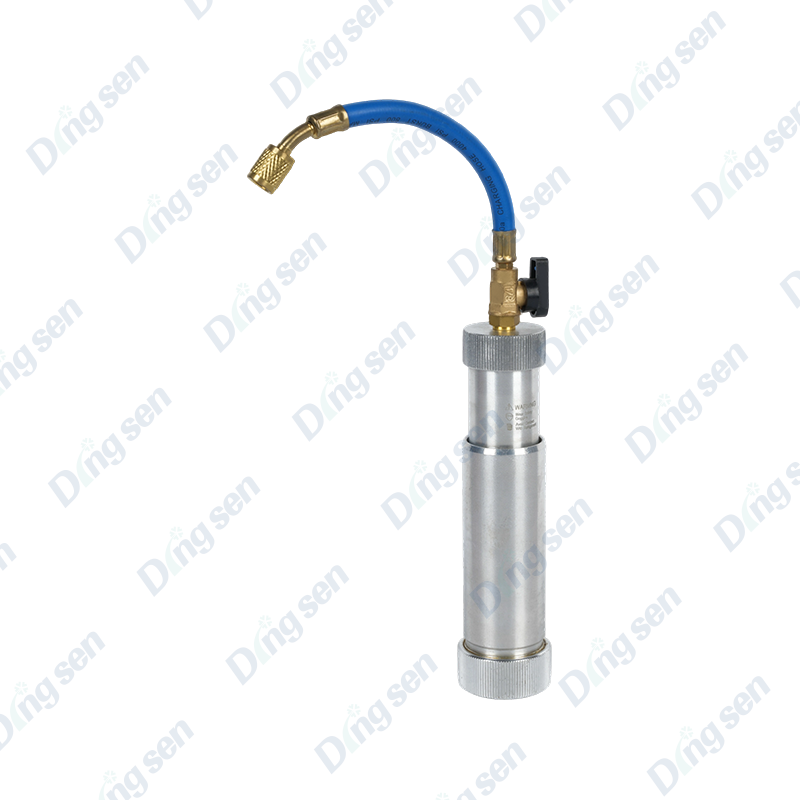
Refrigerant and refrigeration oil filler is a special device for replenishing me...
-
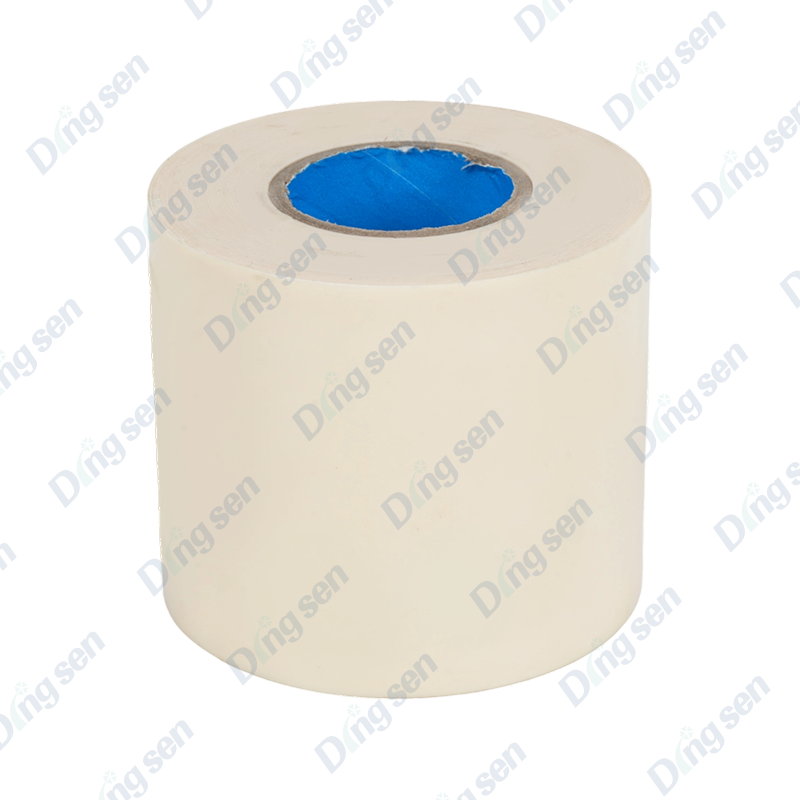
Air conditioning pipe bandage strip is used to secure and protect the pipes conn...
-
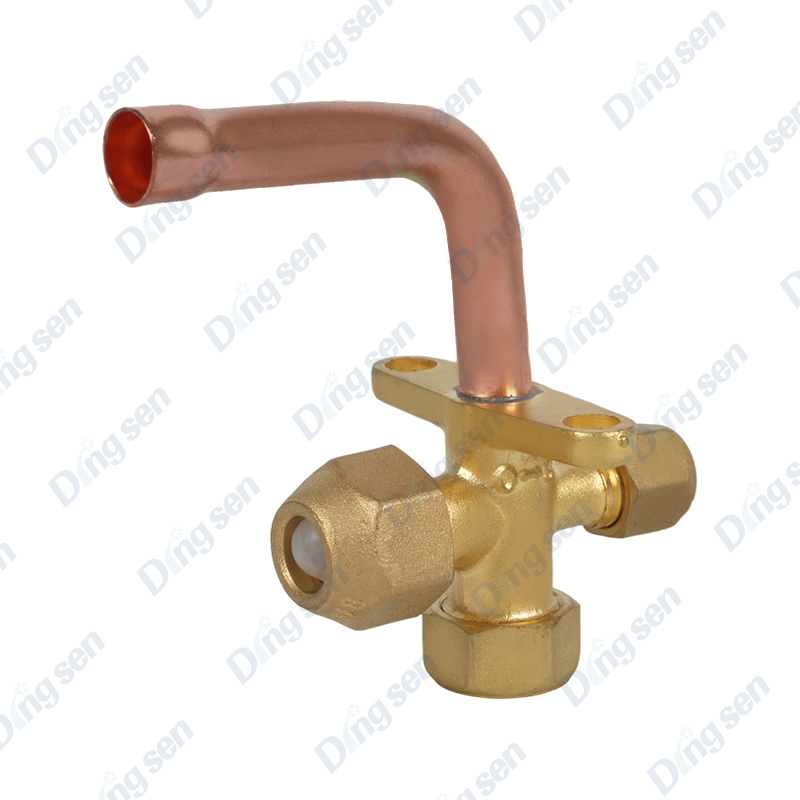
The air conditioning three-way valve is a key component for switching and contro...

Contact Us
-

No. 109 Jiefang Road, Diankou Town, Zhuji City, Shaoxing, Zhejiang Province
-

+86-13867581196
-

Copyright © shaoxing DingSen Refrigeration Technology Co Ltd. All Rights Reserved
OEM Refrigeration Parts Manufacturer Custom Automotive AC Parts Factory